
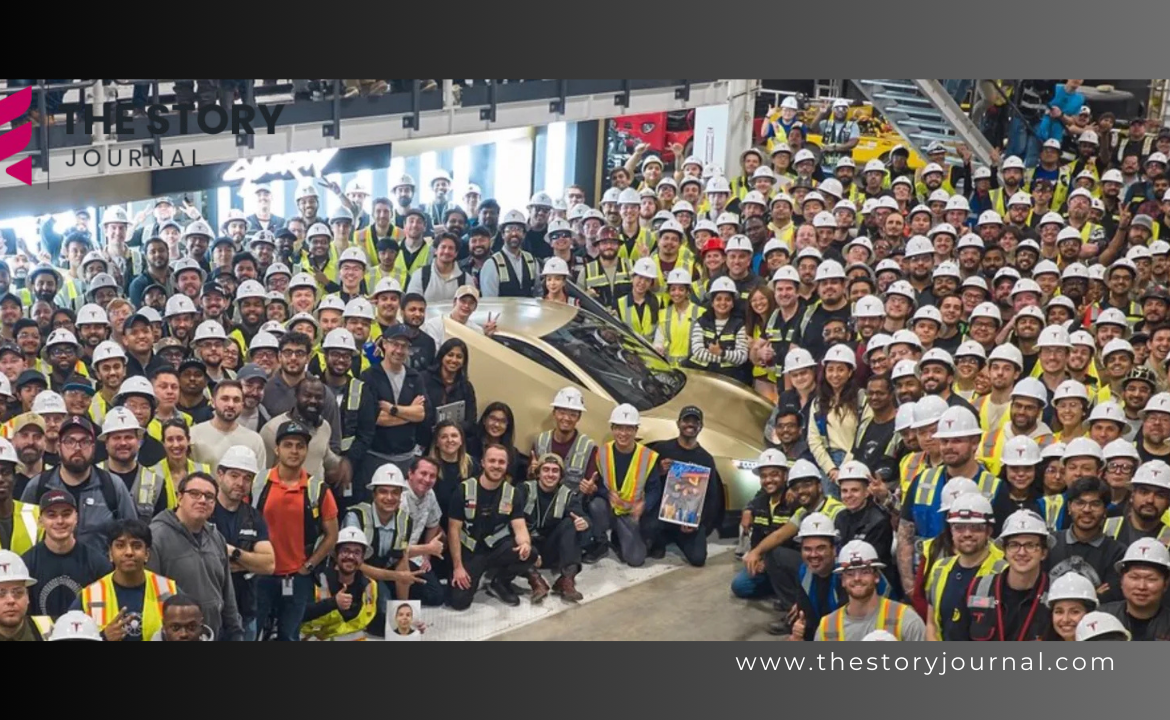
Elon Musk Celebrates Cybercab Milestone at Gigafactory Texas
Source: Twitter
In a major milestone for autonomous mobility, Tesla rolled out its first fully autonomous Cybercab from the production line at Gigafactory Texas on Tuesday. The announcement, widely shared on Twitter, marks a significant step toward Tesla’s long-promised robotaxi future—first formally unveiled during the October 2024 “We, Robot” event.
CEO Elon Musk congratulated the Tesla team on social media, calling the rollout a “historic moment” for the company. He emphasized that volume production is scheduled to begin in April, powered by a new manufacturing process designed to deliver five times the output of traditional automotive assembly lines. However, Musk also cautioned that the production ramp-up will begin gradually to ensure quality and system validation.
The Cybercab represents Tesla’s boldest attempt yet to redefine urban transportation through fully autonomous, driverless ride-hailing vehicles.
A Purpose-Built Autonomous Vehicle
Unlike Tesla’s existing lineup, the Cybercab is designed from the ground up as a two-seater robotaxi. It features no steering wheel or pedals, signaling Tesla’s full commitment to autonomous-only architecture. The compact design aims to maximize efficiency while minimizing manufacturing costs.
At scale, Tesla expects the Cybercab to be priced under $30,000—an aggressive target that could significantly disrupt both the electric vehicle market and the ridesharing industry. If achieved, the price point would make large-scale fleet deployment economically viable for cities and mobility operators.
The vehicle’s simplified interior, reduced mechanical components, and reliance on advanced Full Self-Driving software are central to Tesla’s cost strategy.
From “We, Robot” to Production Reality
The Cybercab concept was first introduced during Tesla’s high-profile October 2024 “We, Robot” event. That presentation showcased Tesla’s vision of a future where robotaxis operate autonomously, providing affordable and efficient transportation without human drivers.
Tuesday’s rollout signals the transition from concept to production. Videos circulating on Twitter show freshly manufactured Cybercabs leaving the Texas production line, drawing applause from factory workers and executives.
For Tesla, the moment represents validation of years of research, software development, and hardware integration.
A New Manufacturing Approach
Elon Musk highlighted a breakthrough production technique that underpins the Cybercab’s manufacturing strategy. According to Musk, the new process is designed to produce vehicles at five times the rate of conventional automotive assembly lines.
This next-generation manufacturing system leverages:
- Advanced automation and robotics
- Streamlined vehicle architecture
- Reduced parts complexity
- Modular assembly design
Tesla has long emphasized vertical integration and manufacturing innovation as competitive advantages. Gigafactory Texas serves as a testbed for this high-efficiency production philosophy.
However, despite the ambitious output goals, Musk acknowledged that the ramp-up phase will proceed cautiously. Initial production volumes will remain limited as Tesla refines quality control and validates autonomous system performance in real-world conditions.
Testing in Challenging Conditions
Twitter videos also show Cybercabs undergoing road tests in heavy rain around the Texas facility. The footage is intended to build confidence in Tesla’s Full Self-Driving system, which relies on advanced camera vision and neural network processing rather than lidar-based solutions favored by some competitors.
Testing in adverse weather conditions is critical for autonomous vehicles. Rain can obscure cameras, affect traction, and complicate object detection. By demonstrating performance in challenging environments, Tesla aims to reassure regulators and the public about system reliability.
Full Self-Driving remains central to the Cybercab’s success. Without robust, dependable autonomy, the robotaxi model cannot function at scale.
The Promise of Affordable Robotaxis
If Tesla achieves its sub-$30,000 price target at scale, the implications for urban mobility could be transformative. Lower vehicle costs combined with driverless operation may significantly reduce the price of ridesharing services.
Potential impacts include:
- Reduced per-mile transportation costs
- Decreased reliance on personal car ownership
- Expanded mobility access in urban areas
- Increased competition in the ridesharing sector
Tesla’s long-term strategy appears to envision a global network of autonomous vehicles operating similarly to today’s ridesharing platforms—but without human drivers.
Regulatory Hurdles Ahead
Despite the excitement surrounding the production milestone, significant regulatory challenges remain. Fully autonomous vehicles must comply with federal, state, and local safety standards. Approval processes vary across jurisdictions, and widespread deployment will require collaboration with transportation authorities.
Concerns about safety, liability, and cybersecurity continue to shape public debate around autonomous driving technology. While Tesla has made bold claims about Full Self-Driving capabilities, regulatory approval for unsupervised operation remains a complex and evolving process.
Tesla’s ability to navigate these legal and policy landscapes will play a decisive role in determining how quickly Cybercabs reach public streets.
Gigafactory Texas as Innovation Hub
Located near Austin, Gigafactory Texas has become a central pillar of Tesla’s production ecosystem. The facility manufactures multiple Tesla models and serves as a focal point for innovation in battery technology and assembly efficiency.
The addition of Cybercab production reinforces the factory’s strategic importance. It also signals Tesla’s intent to centralize next-generation vehicle development within its most advanced facilities.
The rollout event drew attention not just from industry analysts but from technology enthusiasts and investors tracking Tesla’s next growth phase.
Competitive Landscape
Tesla is not alone in pursuing autonomous mobility. Several technology and automotive companies are investing heavily in self-driving systems and robotaxi fleets. However, Tesla’s vertically integrated model—combining hardware, software, and manufacturing—sets it apart.
The Cybercab’s minimalist design and aggressive cost target reflect Tesla’s strategy of scaling autonomy through affordability. Competitors often focus on premium autonomous services in limited geofenced areas, while Tesla aims for broader scalability.
Whether Tesla’s camera-based approach can outperform lidar-dependent systems remains a key point of industry debate.
Market and Investor Reaction
Following news of the Cybercab production milestone, social media buzz intensified. Investors and Tesla supporters celebrated the achievement as proof of execution on long-term promises.
Market analysts note that successful scaling of autonomous fleets could unlock new revenue streams beyond traditional vehicle sales. Autonomous ride-hailing services could generate recurring income through fleet operations, software subscriptions, and mobility platforms.
However, skeptics caution that production milestones do not guarantee regulatory clearance or consumer acceptance.
Public Perception and Safety Confidence
Public trust is critical to the adoption of autonomous vehicles. Videos showing Cybercabs operating in heavy rain are part of Tesla’s effort to demonstrate resilience and reliability.
Safety remains the primary concern for regulators and consumers alike. Tesla must continue to provide transparent performance data and demonstrate improvements in accident reduction compared to human drivers.
The broader acceptance of driverless vehicles will depend not only on technology but also on communication and public education.
The Road to April Volume Production
Tesla’s announcement places April as the starting point for volume production. Between now and then, the company will focus on:
- Scaling manufacturing systems
- Conducting expanded road tests
- Refining software updates
- Coordinating regulatory approvals
The gradual ramp-up reflects lessons learned from previous Tesla production launches, where rapid scaling sometimes led to bottlenecks.
A measured approach may help ensure smoother deployment.
Transforming Ridesharing
If successful, the Cybercab could redefine the economics of ridesharing. Without driver wages, operational costs decline significantly. Fleet operators could deploy autonomous vehicles continuously, optimizing route efficiency and reducing idle time.
This model could challenge existing ridesharing companies and potentially shift the competitive landscape of urban mobility.
Lower-cost transportation options may also reduce congestion and environmental impact if integrated with broader smart-city planning.
Challenges Beyond Production
Beyond manufacturing and regulation, Tesla must address:
- Insurance frameworks for autonomous fleets
- Data privacy and cybersecurity safeguards
- Infrastructure integration
- Public acceptance in diverse global markets
Each of these factors represents a critical component of long-term viability.
Conclusion
Tesla’s production of its first Cybercab at Gigafactory Texas marks a significant milestone in the journey toward fully autonomous transportation. With Elon Musk signaling April as the start of volume production and highlighting a revolutionary manufacturing process capable of five times traditional output, the company is positioning itself at the forefront of the robotaxi revolution.
Testing footage in heavy rain underscores Tesla’s confidence in its Full Self-Driving software, while the projected sub-$30,000 price point at scale suggests an ambitious plan to democratize autonomous mobility.
However, regulatory approvals, public trust, and operational scaling remain key hurdles.
As Twitter continues to buzz with excitement and debate, one thing is clear: Tesla’s Cybercab rollout represents not just a new vehicle launch, but a bold step toward reshaping the future of transportation.