
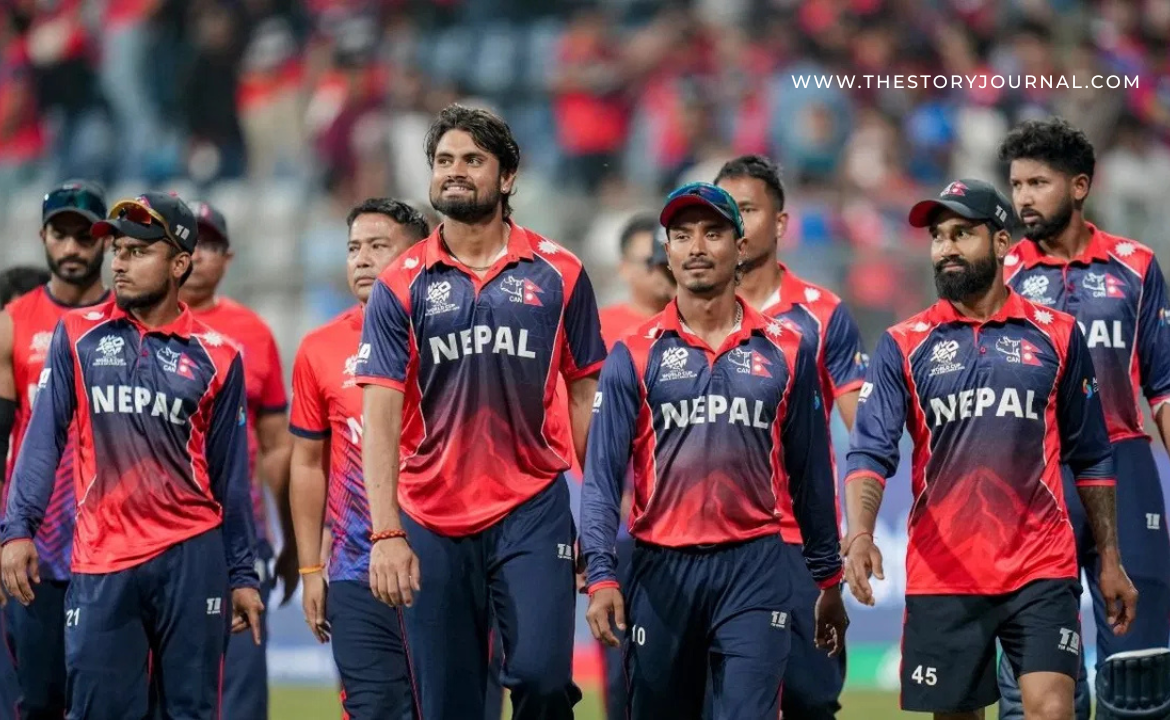
A Nation Believed: Nepal’s Near-Upset of England in Mumbai
Source: Twitter/X (Breaking Updates)
Nepal came within touching distance of scripting one of the greatest upsets in T20 World Cup history, pushing defending champions England to the brink in a dramatic four-run loss at the Wankhede Stadium in Mumbai. In their opening match of the T20 World Cup 2026, Nepal showcased fearless cricket, heart, and remarkable skill, nearly chasing down England’s total of 184 for seven in a match that had fans on the edge of their seats until the final ball.
According to updates shared on Twitter/X, England posted 184/7 after being rescued by crucial innings from Jacob Bethell (55), Harry Brook (53), and a blistering unbeaten 39 off just 18 balls from Will Jacks. In response, Nepal produced a spirited chase powered by Rohit Paudel’s 39 off 34 balls, Dipendra Singh Airee’s aggressive 44 off 29, and Lokesh Bam’s unbeaten 39 off 20. The match went down to the final over, where Sam Curran’s calm execution under pressure sealed a narrow four-run victory for England.
What unfolded at Wankhede was more than just a close game. It was a statement from Nepal and a reminder of the magic that an expanded T20 World Cup can produce.
A Night That Captured the Spirit of World Cup Cricket
The Wankhede Stadium has long been a theatre of unforgettable cricketing moments, and this T20 World Cup 2026 opener added another thrilling chapter to its history. The atmosphere was electric, with a packed crowd that included a significant Nepalese presence. Nepal captain Rohit Paudel later noted that it felt like the whole nation had turned up in Mumbai, a testament to the passion and belief surrounding the team.
From the first ball, the contest carried the weight of expectation for England and the excitement of possibility for Nepal. For England, this was about asserting dominance as a heavyweight of world cricket. For Nepal, it was an opportunity to show that they belonged on the biggest stage.
England’s Innings: Recovery and Firepower
England’s innings of 184 for seven was built on resilience and late acceleration. Early challenges tested their top order, but Jacob Bethell and Harry Brook steadied the ship with composed half-centuries. Bethell’s 55 and Brook’s 53 provided the backbone of England’s total, ensuring that the innings did not lose direction after early pressure.
As the innings progressed, Will Jacks provided the late fireworks. His unbeaten 39 off just 18 balls transformed a competitive total into a daunting one. Jacks’ ability to clear the boundary and find gaps under pressure highlighted England’s depth and power in the middle order. What might have been a total in the 160s quickly surged beyond 180, changing the complexion of the game.
This late burst proved crucial, especially in a format where margins are razor-thin. England’s batting performance was not flawless, but their ability to recover and accelerate underscored why they remain one of the most dangerous T20 sides in the world.
Nepal’s Chase: Fearless, Skillful, and Almost Historic
Nepal’s response was nothing short of inspirational. Chasing 185 against a team of England’s pedigree is a monumental challenge, especially in a World Cup opener. Yet Nepal approached the chase with belief rather than fear.
Captain Rohit Paudel led from the front with a composed 39 off 34 balls. His innings provided stability at the top, allowing Nepal to build a platform. Dipendra Singh Airee injected momentum with a dynamic 44 off 29, playing with freedom and intent that unsettled England’s bowling plans. As the required rate climbed, Lokesh Bam emerged as the unlikely hero, smashing an unbeaten 39 off just 20 balls to keep Nepal in the hunt until the final moments.
The chase ebbed and flowed. At times, England appeared to have regained control. At others, Nepal’s batters unleashed a flurry of boundaries that reignited hope. The final over encapsulated the drama of T20 cricket: tension, possibility, and heartbreak all wrapped into six deliveries.
Sam Curran’s Ice-Cold Final Over
With Nepal needing a handful of runs in the final over, the spotlight fell on Sam Curran. Bowling the last over in a World Cup match against a fearless opponent is the kind of pressure that defines careers. Curran’s composure under such circumstances was decisive. His ability to hold his nerve, execute his plans, and deny Nepal the final flourish sealed a four-run victory for England.
This final over was a reminder that while batting fireworks capture attention, calm and clarity in crunch moments often decide matches. Curran’s performance ensured England escaped with a win, but it also underscored how close Nepal came to rewriting World Cup history.
The Crowd and the Nepalese Moment in Mumbai
One of the most striking aspects of the match was the crowd support for Nepal. Rohit Paudel’s observation that it felt like the whole nation had shown up in Mumbai spoke volumes about the emotional connection between the team and its supporters. The Wankhede Stadium echoed with cheers not just for England’s stars, but for every Nepal boundary, every near-miss, and every moment of defiance.
This support turned the match into more than a contest between two teams. It became a celebration of cricket’s ability to unite communities across borders. For Nepalese fans, the performance was a source of immense pride. For neutral supporters, it was a reminder of why underdog stories resonate so deeply in sport.
Praise from Cricketing Greats
The cricketing world took notice of Nepal’s performance. According to reactions shared on Twitter/X, former stars like Dale Steyn and Yuvraj Singh praised Nepal’s heart and skill, while Will Jacks also acknowledged the challenge posed by the spirited side. Such praise from established names adds weight to Nepal’s achievement. It signals respect from the global cricket community and recognition that Nepal’s rise is built on genuine quality rather than mere enthusiasm.
These endorsements matter. For emerging cricketing nations, validation from established figures can boost confidence, attract attention, and inspire the next generation of players.
The Magic of an Expanded T20 World Cup
This match perfectly illustrated the promise of an expanded T20 World Cup. By including more teams, the tournament creates space for new narratives, unexpected challenges, and the kind of drama that keeps fans engaged. Nepal’s near-upset of England was not just an entertaining game; it was evidence that the competitive gap in world cricket is narrowing.
The expanded format allows teams like Nepal to test themselves against the best, gain exposure to high-pressure environments, and accelerate their development. For fans, it means more stories of courage, growth, and possibility. Matches like this justify the expansion by delivering unforgettable moments that traditional formats might not have allowed.
England’s Perspective: Relief and Reflection
For England, the four-run win was both a relief and a warning. Escaping defeat in their tournament opener preserved momentum, but the narrow margin highlighted areas for reflection. Being pushed so hard by Nepal serves as a reminder that no opponent can be taken lightly in modern T20 cricket.
England’s batting depth proved crucial, particularly the late surge provided by Will Jacks. Sam Curran’s closing over showcased the importance of composure under pressure. Yet the match also exposed vulnerabilities that stronger opponents could exploit later in the tournament. In that sense, this near-scare may prove valuable, sharpening England’s focus for the matches ahead.
Nepal’s Takeaway: Pride, Belief, and Momentum
Although the result went against them, Nepal emerged with immense pride. Taking England to the final over in a World Cup opener is an achievement that will resonate long after the scoreboard is forgotten. The performances of Rohit Paudel, Dipendra Singh Airee, and Lokesh Bam demonstrated that Nepal possess both the talent and temperament to compete at the highest level.
More importantly, this match can serve as a catalyst for Nepal’s campaign. Belief is a powerful force in sport. Having come so close against a powerhouse, Nepal can approach their remaining matches with renewed confidence. If they carry forward the same fearlessness, further upsets may not be far away.
A Match That Redefined Expectations
This thriller at Wankhede challenged assumptions about the hierarchy of world cricket. It showed that preparation, passion, and belief can bridge gaps that once seemed insurmountable. Nepal did not play like underdogs; they played like contenders who belonged on the same field as the defending champions.
For the tournament as a whole, this match set the tone. It promised that the T20 World Cup 2026 would be unpredictable, emotionally charged, and rich with stories beyond the traditional powerhouses.
Looking Ahead in the Tournament
As the T20 World Cup progresses, both teams will take valuable lessons from this encounter. England will look to tighten their execution in high-pressure moments, ensuring that narrow escapes do not become a pattern. Nepal will aim to build on this performance, transforming near-misses into historic victories.
The memory of this four-run thriller will linger. For England, it will be a reminder of how thin the margins are at this level. For Nepal, it will be a source of motivation—a sign that they are not far from pulling off the unimaginable.
Conclusion
Nepal’s near-upset of England in their T20 World Cup 2026 opener at Wankhede was a celebration of cricket’s unpredictability and heart. England’s 184/7, built on key innings from Jacob Bethell, Harry Brook, and Will Jacks, set the stage for a chase that Nepal almost completed through the efforts of Rohit Paudel, Dipendra Singh Airee, and Lokesh Bam. Sam Curran’s cool final over ultimately denied Nepal a famous victory by just four runs.
As reactions poured in on Twitter/X, praise from cricketing greats underscored the significance of Nepal’s performance and the promise of the expanded tournament format. This match was not just a result on a scorecard; it was a moment that captured the spirit of the World Cup, where belief meets opportunity and underdogs come agonizingly close to rewriting history.