
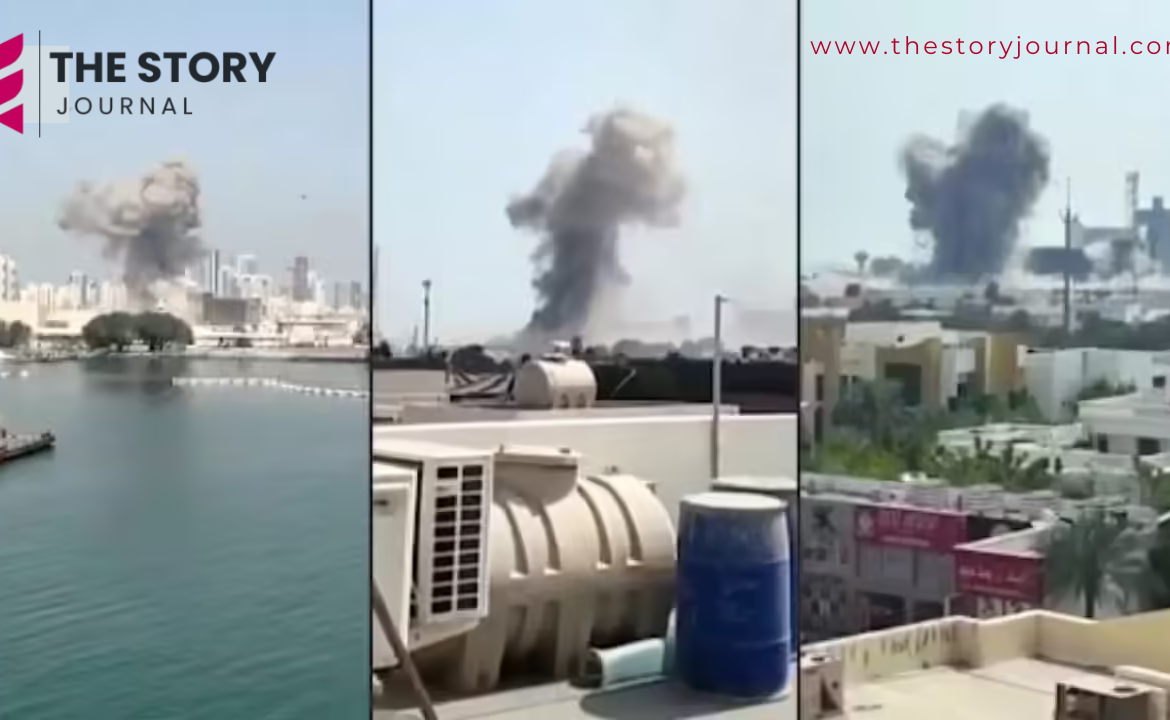
Operation Epic Fury US and Israel Strike Iran as Tehran Fires Back
Source : Twitter
A dramatic and dangerous escalation unfolded in the Middle East after the United States and Israel carried out coordinated strikes on Iranian targets in what has been described as “Operation Epic Fury.” The operation reportedly targeted nuclear facilities, missile infrastructure, and naval assets in multiple locations, including Tehran and Isfahan.
Iran responded with missile launches aimed at Israel and U.S. bases in the Gulf, triggering air defense systems across the region. Most of the retaliatory strikes were intercepted, but debris from one interception reportedly caused a civilian fatality in Abu Dhabi.
As details circulated rapidly on Twitter (X), the world watched anxiously. Oil prices spiked. Airspaces closed. Global leaders urged restraint. Online, reactions ranged from fear of a broader war to dark humor and memes attempting to process the gravity of the moment.
What Is “Operation Epic Fury”?
According to information widely discussed on Twitter, Operation Epic Fury was a coordinated assault conducted by the United States and Israel targeting key Iranian military and strategic assets.
The reported targets included nuclear facilities, missile production and storage sites, naval infrastructure, and high-ranking military leadership.
Among those reportedly killed were Iran’s Defense Minister Amir Nasirzadeh and IRGC commander Mohammed Pakpour. Strikes were said to have hit areas in Tehran and Isfahan—locations long associated with Iran’s military and nuclear programs.
While official confirmations and details remain subject to verification, the scale and precision of the operation suggest a deeply coordinated effort.
Why Were Nuclear and Missile Sites Targeted?
The targeting of nuclear facilities and missile infrastructure signals strategic intent.
For years, concerns over Iran’s nuclear ambitions have shaped regional security policy. Israel has consistently stated that it would not allow Iran to obtain nuclear weapons capability. The United States has oscillated between diplomatic engagement and economic sanctions.
By striking these facilities, the operation appears aimed at disrupting Iran’s nuclear development timeline, degrading ballistic missile capabilities, and sending a deterrent signal.
Striking missile sites also reduces immediate retaliatory capacity, though Iran still demonstrated its ability to respond.
Targeting Senior Military Leadership
Reports that Iran’s Defense Minister Amir Nasirzadeh and IRGC commander Mohammed Pakpour were killed mark a significant development.
Targeted strikes against senior leadership carry powerful symbolic and operational consequences, including disruption of command structure, psychological impact on military institutions, and political shockwaves within Iran.
Such high-profile casualties can escalate conflict dynamics, as they are often seen not just as military blows but as national affronts.
Iran’s Retaliation: Missile Barrages and Gulf Tensions
Iran responded swiftly with missile launches targeting Israel and U.S. bases in the Gulf region.
According to early reports circulating on Twitter, most missiles were intercepted, air defense systems were activated across multiple regions, and one civilian reportedly died in Abu Dhabi due to falling debris.
The limited physical damage does not diminish the seriousness of the response. Even intercepted missile barrages represent a dramatic escalation.
Airspace closures across parts of the Middle East reflected fears of continued exchanges.
Political Rhetoric Escalates
The political reaction was immediate and forceful.
Former U.S. President Donald Trump urged Iranians to overthrow their regime, framing the conflict in ideological terms. Israeli Prime Minister Benjamin Netanyahu described the strikes as part of an effort to remove tyranny and ensure long-term security.
Such rhetoric heightens tensions further. Calls for regime change often harden positions rather than open pathways to de-escalation.
Global Reaction: Calls for Restraint
World leaders across Europe, Asia, and the Middle East urged restraint.
Key concerns include the risk of regional war, disruption of global oil supply, spillover into neighboring states, and direct confrontation between major powers.
The fear of a broader war—frequently referenced online as “WW3”—may be hyperbolic, but it reflects genuine anxiety over cascading escalation.
Oil Markets React Instantly
Energy markets responded sharply.
Oil prices jumped amid concerns that Strait of Hormuz shipping lanes could be disrupted, Gulf production facilities might be targeted, and insurance and transport costs would rise.
Even short-term instability in the region can ripple through global supply chains, affecting fuel prices, shipping, and inflation worldwide.
Airspace Closures and Travel Disruption
Airspace restrictions were implemented across parts of the Middle East.
Airlines rerouted flights. Travelers experienced delays and cancellations. Aviation authorities acted quickly to minimize risks to civilian aircraft.
Such closures underscore how military conflict disrupts not only combatants but global mobility.
The Social Media Dimension
Twitter (X) became a central hub for updates, speculation, and reaction.
Trending themes included prayers for safety, geopolitical analysis threads, oil price charts, dark humor memes, and expressions of fear and disbelief.
One meme trend referenced Formula 1-style celebrations humorously “dodging blame,” reflecting how online communities sometimes cope with tension through satire.
Yet beneath the humor was genuine concern, with many users describing waking up anxiously to the news.
Strategic Implications for Israel
For Israel, the operation aligns with longstanding doctrine of preemptive action against perceived existential threats.
However, risks include sustained missile exchanges, Hezbollah involvement from Lebanon, and escalation across multiple fronts.
Balancing deterrence with containment will be critical.
Strategic Implications for the United States
For the United States, involvement deepens direct confrontation with Iran.
Potential consequences include increased troop risk in Gulf bases, pressure from allies and adversaries, and domestic political debate.
If escalation continues, Washington may face difficult choices between further engagement or diplomatic off-ramps.
Iran’s Internal Calculus
Iran must now weigh demonstrating strength, avoiding catastrophic escalation, and managing domestic reaction.
Strikes on Tehran and Isfahan carry symbolic weight. Leadership losses could fuel nationalist sentiment, strengthening hardline positions.
Could This Become a Regional War?
Several variables determine the trajectory, including the scale of further retaliation, involvement of proxy groups, international mediation, and accidental escalation.
Regional actors are likely calculating their positions carefully.
Economic Shockwaves Beyond Oil
Beyond oil, markets may experience stock volatility, currency fluctuations, and increased defense sector movement.
Insurance costs for shipping in the Gulf could rise sharply.
Humanitarian Concerns
Civilian safety remains paramount.
Even when military assets are primary targets, urban strikes and missile interceptions carry risks. Debris fatalities underscore how civilians remain vulnerable.
Humanitarian organizations have urged restraint and preparedness.
The Role of Diplomacy
Diplomatic channels may now become critical.
Possible avenues include backchannel negotiations, UN Security Council sessions, and regional mediation by Gulf states.
History shows that even intense flare-ups sometimes lead to renewed talks.
Information Warfare and Narrative Battles
Conflicts today unfold not only militarily but digitally.
Competing narratives attempt to frame legitimacy, responsibility, and success or failure.
Online misinformation can inflame tensions further.
Psychological Impact Worldwide
Global audiences feel indirect effects.
Anxiety about global war trends quickly online. Even distant populations experience stress from uncertainty and economic consequences.
The rapid information cycle amplifies emotional reactions.
Military Technology on Display
Missile interceptions highlight air defense capabilities, detection systems, and rapid response coordination.
The ability to intercept most retaliatory missiles may shape strategic calculations going forward.
Risk of Miscalculation
One of the gravest risks in fast-moving conflict is misinterpretation.
A missile landing unexpectedly, a mistaken identification, or communication breakdown could escalate events beyond original intentions.
The Energy Security Question
Energy-importing nations are closely monitoring Gulf maritime traffic, pipeline security, and strategic reserves.
Any disruption could pressure global economies already grappling with inflation.
Public Sentiment in the Digital Age
The mixture of humor, fear, prayer, and political debate on Twitter reflects modern crisis culture.
In moments of high tension, memes become coping tools, hashtags become rallying cries, and analysis spreads rapidly.
Digital platforms shape public understanding in real time.
The Broader Historical Context
Tensions between Israel and Iran have simmered for decades.
Proxy conflicts, cyber operations, covert strikes, and regional competition form the backdrop to this escalation.
Operation Epic Fury represents a dramatic shift into overt confrontation.
What Happens Next?
The immediate future hinges on restraint.
Scenarios include limited exchange followed by de-escalation, sustained tit-for-tat strikes, or broader regional involvement.
Markets, militaries, and diplomats remain on high alert.
Final Reflections
The coordinated strikes under Operation Epic Fury and Iran’s retaliation mark a pivotal moment in Middle Eastern geopolitics.
The world now watches for signs of escalation or diplomacy. Oil prices, airspace closures, political rhetoric, and social media reactions all signal the magnitude of the moment.
While many missiles were intercepted and large-scale destruction appears limited for now, the symbolic and strategic implications are profound.
In an interconnected world, regional conflict reverberates globally—economically, politically, and emotionally.
As global leaders call for restraint, the hope remains that cooler heads prevail before escalation spirals further.
For now, uncertainty dominates.
And on Twitter, amid memes and midnight anxieties, millions refresh their feeds, waiting for the next development in a crisis that could reshape global politics.