
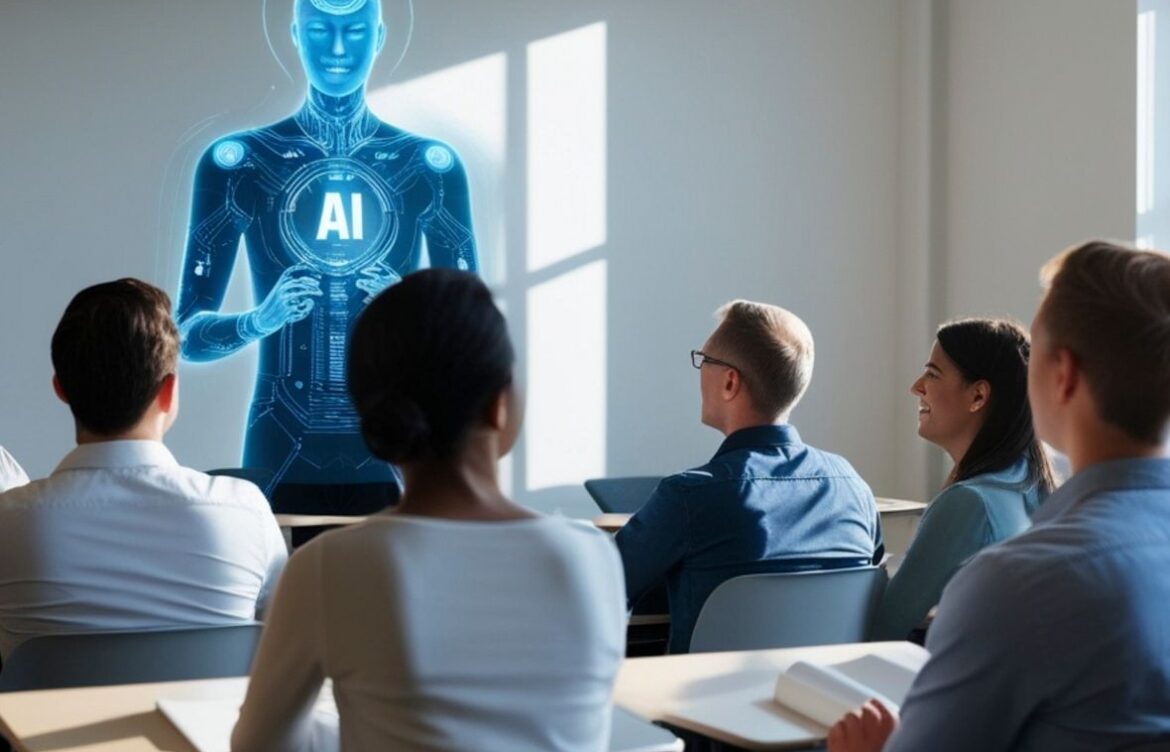
Artificial Intelligence in Education and Personalized Learning
Education is undergoing a profound transformation, and artificial intelligence is at the center of this change. In 2025, AI is no longer a supporting technology used only by advanced institutions or edtech companies. It has become a core enabler of personalized learning, helping educators address individual student needs, improve outcomes, and create more inclusive and effective learning environments.
Traditional education models often struggle to meet the diverse learning styles, abilities, and paces of students. Artificial intelligence bridges this gap by using data, automation, and adaptive systems to tailor learning experiences for each learner. This article explores artificial intelligence in education and personalized learning, explaining how it works, its benefits, challenges, and long term impact on students and educators.
Understanding Artificial Intelligence in Education
Artificial intelligence in education refers to the use of intelligent systems that can analyze learner data, identify patterns, and adapt educational content accordingly. These systems continuously learn from student interactions and improve their recommendations and responses over time.
In educational settings, AI supports teaching and learning through technologies such as machine learning, natural language processing, predictive analytics, and intelligent automation. Rather than replacing teachers, AI acts as an assistant that enhances instruction, assessment, and student support.
What Is Personalized Learning
Personalized learning is an approach that tailors education to the individual needs, strengths, interests, and pace of each student. Instead of delivering the same content in the same way to all learners, personalized learning adapts instruction to maximize understanding and engagement.
Artificial intelligence makes personalized learning scalable. What was once possible only through one on one tutoring can now be delivered to large groups of students using intelligent systems.
Traditional vs Personalized Learning
| Aspect | Traditional Learning | AI Personalized Learning |
| Learning pace | Same for all | Individualized |
| Content delivery | Fixed curriculum | Adaptive content |
| Feedback | Delayed | Real time |
| Student support | Limited | Continuous |
| Learning outcomes | Variable | Improved consistency |
How AI Enables Personalized Learning
Artificial intelligence enables personalization by collecting and analyzing large amounts of learning data. This includes student responses, engagement levels, time spent on tasks, and assessment results.
Based on this data, AI systems can:
- Adjust content difficulty
- Recommend additional resources
- Identify learning gaps
- Provide instant feedback
- Suggest personalized learning paths
These capabilities allow students to progress at their own pace while receiving targeted support where needed.
AI Powered Adaptive Learning Systems
Adaptive learning systems are one of the most impactful applications of AI in education.
These systems dynamically adjust lessons and activities based on student performance. If a student struggles with a concept, the system provides additional explanations or practice. If a student masters a topic quickly, it introduces more advanced material.
Benefits of Adaptive Learning
| Feature | Learning Impact |
| Dynamic difficulty | Reduced frustration |
| Targeted practice | Better understanding |
| Continuous assessment | Faster improvement |
| Self paced progress | Higher confidence |
Adaptive learning helps students stay motivated and engaged.
Personalized Assessments and Feedback
Assessment plays a crucial role in personalized learning, and AI has transformed how it is delivered.
AI powered assessment tools evaluate quizzes, assignments, and written responses with speed and consistency. They provide immediate feedback, allowing students to correct mistakes and improve continuously.
Teachers benefit from detailed insights into student progress, enabling data driven interventions and support.
Assessment Comparison
| Assessment Area | Traditional | AI Enabled |
| Feedback time | Slow | Instant |
| Evaluation consistency | Variable | Standardized |
| Progress tracking | Manual | Automated |
| Learning insights | Limited | In depth |
AI Tutors and Virtual Learning Assistants
AI tutors and virtual assistants provide personalized support outside the classroom.
These systems answer student questions, explain concepts, guide practice sessions, and offer study recommendations. Available at any time, AI tutors ensure that learning does not stop after class hours.
For students who hesitate to ask questions in class, AI assistants provide a low pressure way to seek help and clarification.
Role of AI in Supporting Teachers
Artificial intelligence enhances teaching by reducing administrative workload and providing actionable insights.
AI helps teachers by:
- Automating grading and attendance
- Analyzing student performance trends
- Identifying at risk learners early
- Supporting lesson planning
Teacher Support Through AI
| Teaching Task | Without AI | With AI |
| Grading | Time consuming | Automated |
| Student monitoring | Manual | Data driven |
| Lesson planning | Repetitive | Assisted |
| Individual support | Limited | Targeted |
This allows teachers to focus on mentorship, creativity, and meaningful interaction.
Personalized Learning for Diverse Student Needs
AI powered personalized learning supports inclusion by adapting to diverse learning requirements.
Students with learning disabilities, language barriers, or different cognitive styles benefit from customized content, assistive technologies, and flexible pacing.
Inclusion Through AI
| Student Need | AI Support |
| Learning difficulties | Adaptive content |
| Language differences | Translation tools |
| Accessibility needs | Text to speech and speech to text |
| Confidence building | Self paced learning |
Personalization ensures that no student is left behind.
AI in Online and Hybrid Learning Environments
Online and hybrid learning models rely heavily on AI to deliver personalized experiences at scale.
AI systems track engagement, recommend content, and adjust learning paths in digital environments. In hybrid models, AI bridges the gap between classroom instruction and online learning by maintaining continuity and personalization.
This integration improves learning consistency and outcomes across different formats.
Benefits of AI Driven Personalized Learning
Artificial intelligence brings several benefits to education through personalization.
| Benefit | Impact |
| Improved engagement | Higher motivation |
| Better learning outcomes | Stronger performance |
| Faster progress | Reduced learning gaps |
| Scalable personalization | Broad reach |
| Data driven decisions | Targeted support |
These benefits make AI a powerful tool for modern education systems.
Challenges and Concerns in AI Personalized Learning
Despite its advantages, AI in personalized learning presents challenges that must be addressed.
Key Challenges
| Challenge | Concern |
| Data privacy | Student information security |
| Bias in algorithms | Unequal outcomes |
| Technology access | Digital divide |
| Teacher training | Adoption barriers |
| Over reliance on AI | Reduced human interaction |
Ethical use, transparency, and proper training are essential to mitigate these risks.
Building Trust and Ethics in AI Education Systems
Trust is critical when using AI in education.
Educational institutions must ensure:
- Transparent data usage
- Secure data storage
- Ethical algorithm design
- Human oversight in decision making
Responsible AI implementation builds confidence among students, parents, and educators.
Long Term Impact on Education Systems
The long term impact of AI driven personalized learning extends beyond individual classrooms.
Education systems become:
- More flexible and adaptive
- Focused on mastery rather than memorization
- Better aligned with student needs
- More inclusive and accessible
AI supports a shift toward lifelong learning and continuous skill development.
The Future of AI and Personalized Learning
The future of education will see deeper integration of AI technologies.
Emerging developments include:
- Intelligent virtual tutors
- Predictive learning analytics
- Immersive personalized experiences
- Stronger integration with national education frameworks
Personalized learning powered by AI will become a standard rather than an exception.
Conclusion
Artificial intelligence is transforming education by making personalized learning scalable, effective, and inclusive. By adapting to individual student needs, providing real time feedback, and supporting teachers with actionable insights, AI enhances learning outcomes and engagement.
While challenges remain, responsible and thoughtful implementation of AI can create education systems that empower every learner. In 2025 and beyond, artificial intelligence and personalized learning together represent the future of education.