
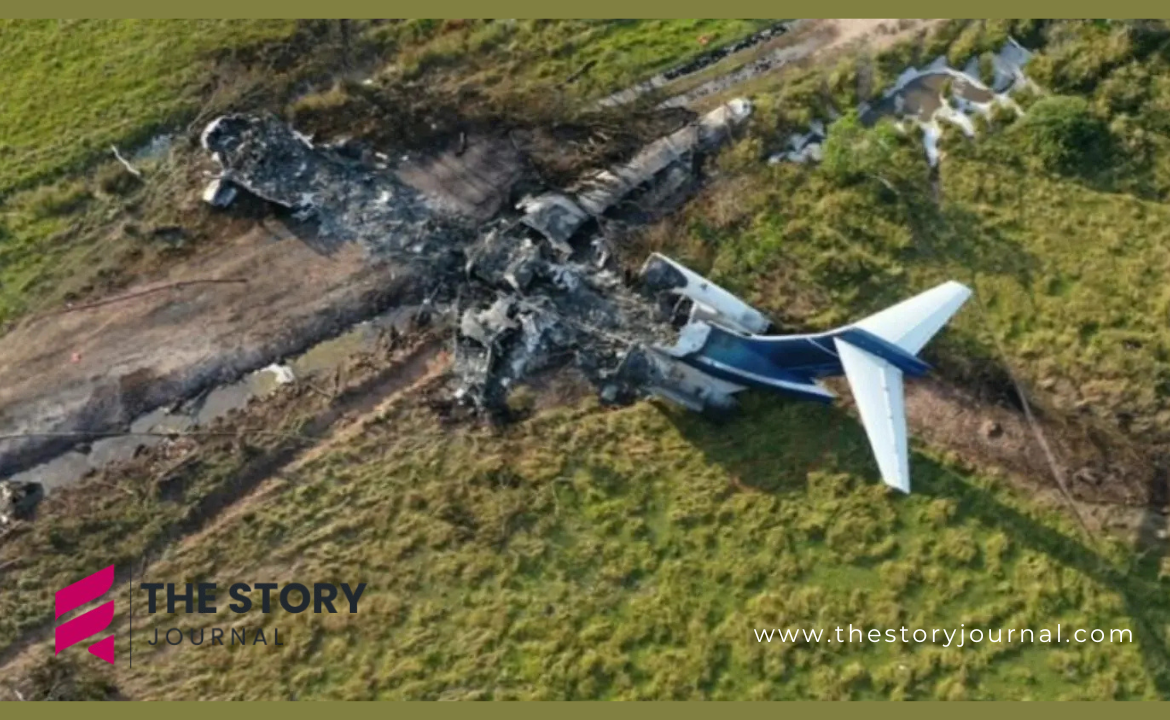
Seven Onboard as Redbird Airways Flight Crashes Near Chatra
Source : Twitter
A medical air ambulance carrying seven people crashed in a forested area of Jharkhand shortly after taking off from Ranchi on Monday evening, triggering an urgent multi-agency rescue response and a formal aviation investigation.
According to details circulating on Twitter and confirmed by early official briefings, the aircraft—a Beechcraft C90 operated by Redbird Airways—departed from Birsa Munda Airport at 7:11 p.m. Contact was reportedly lost 23 minutes later.
The plane is believed to have crashed in Kasaria Panchayat near Chatra district, a region marked by dense forest and challenging terrain. As of the latest updates, there are no officially confirmed details regarding casualties. Rescue teams have reached the site, while investigations by the Directorate General of Civil Aviation (DGCA) and the Aircraft Accident Investigation Bureau (AAIB) are underway.
The incident has sparked widespread concern and speculation on Twitter, where users are sharing updates, expressing prayers, and calling for verified information.
The Aircraft: Beechcraft C90 Medical Air Ambulance
The aircraft involved has been identified as a Beechcraft C90, a twin-engine turboprop widely used for charter operations, business aviation, and medical evacuation missions.
The C90 is part of the King Air family, known for reliability and versatility. In medical configurations, it is typically equipped with:
- Stretcher systems
- Onboard medical monitoring equipment
- Oxygen supply systems
- Space for doctors and paramedics
Air ambulances play a crucial role in transferring critical patients between cities, particularly in time-sensitive medical cases.
Monday’s flight was reportedly one such mission.
The Timeline: From Takeoff to Loss of Contact
According to information being shared online and by initial reports:
- 7:11 p.m.: The aircraft departed Birsa Munda Airport in Ranchi.
- Approximately 23 minutes later: Air traffic control lost contact.
- Shortly thereafter: Reports of a possible crash in forested terrain near Chatra began emerging.
The relatively short time between takeoff and loss of communication raises questions that investigators will now seek to answer.
Was there a technical malfunction?
Did weather conditions play a role?
Was there a communication failure?
These answers will depend on flight data, cockpit voice recordings (if recoverable), maintenance records, and air traffic control logs.
Who Was Onboard?
The aircraft was carrying seven people:
- Two pilots
- One patient
- One doctor
- One paramedic
- Two attendants
Medical evacuation flights often operate under urgent conditions, making the presence of trained medical staff standard practice.
At this stage, authorities have not released confirmed information about casualties or survivor status. Reports of wreckage have surfaced, but officials are urging caution against spreading unverified claims.
Twitter has become a mix of anxious speculation and heartfelt messages.
The Crash Location: Kasaria Panchayat Near Chatra
The crash site is believed to be located in Kasaria Panchayat, near Chatra district in Jharkhand.
This region is known for:
- Dense forest cover
- Limited road access
- Undulating terrain
Rescue operations in such areas are complex. Emergency responders must navigate narrow pathways, potentially low visibility, and logistical challenges in transporting equipment and personnel.
Images circulating on social media show rescue teams moving through wooded areas, though authorities have yet to release official photographs confirming the wreckage location.
Rescue Operations in Challenging Terrain
Local administration, police units, and disaster response teams were mobilized shortly after contact was lost.
Reaching the crash site in forested terrain requires:
- GPS mapping of last known coordinates
- Ground search teams
- Possible drone reconnaissance
- Coordination with local villagers familiar with the area
As night operations can increase risk for responders, lighting, medical readiness, and communication systems are critical.
The primary focus remains search, rescue, and assessment of survivors.
Role of DGCA and AAIB
The Directorate General of Civil Aviation (DGCA) is India’s aviation regulatory authority responsible for oversight of civil aviation safety.
The Aircraft Accident Investigation Bureau (AAIB) conducts detailed investigations into aviation accidents to determine causes and recommend safety improvements.
In incidents like this, standard procedures include:
- Securing the crash site
- Recovering flight recorders
- Collecting debris for analysis
- Reviewing pilot training and maintenance records
- Examining weather data
The goal is not just to determine what happened—but why it happened, and how similar incidents can be prevented.
Twitter as a Real-Time News Source
Within minutes of reports emerging, Twitter users began sharing updates, flight tracking screenshots, and local eyewitness accounts.
Some posts expressed concern:
“Praying for everyone onboard.”
Others urged restraint:
“Wait for official confirmation before sharing casualty numbers.”
Social media often becomes a primary channel for breaking news. However, it can also amplify misinformation.
Authorities have emphasized relying on official statements rather than unverified viral claims.
Air Ambulance Missions: High Stakes Operations
Medical evacuation flights differ from routine passenger services.
They often:
- Operate under urgent timelines
- Fly into smaller airports
- Carry critical patients
- Fly at non-peak hours
While safety standards apply equally, the operational pressure can be different.
The Beechcraft C90 is commonly chosen for such missions because of its ability to operate from shorter runways and access regional airports.
Still, aviation accidents—even rare ones—highlight the inherent risks of flight operations.
Safety Record and Investigative Focus
While no cause has been identified, investigators will typically examine:
- Aircraft maintenance history
- Pilot experience and rest cycles
- Weather conditions at departure and along route
- Mechanical anomalies
- Communication logs
Twin-engine turboprops like the C90 are designed with redundancy systems, but mechanical or environmental factors can still create critical situations.
The investigation process may take weeks or months.
Impact on Aviation Community
Incidents involving medical flights carry emotional weight.
They involve not only aviation professionals but also healthcare workers and vulnerable patients.
Pilots operating air ambulances undergo specialized training, and medical crews often work under intense pressure.
News of such crashes reverberates across aviation and healthcare communities alike.
Emotional Response Online
Twitter reactions reflect a spectrum of emotions:
- Anxiety for those onboard
- Sympathy for families
- Calls for aviation safety reforms
- Gratitude toward rescue personnel
Hashtags related to Ranchi, Jharkhand, and air ambulance incidents have trended regionally.
In moments like these, social media becomes both an information hub and a space for collective empathy.
Waiting for Verified Updates
As of now, there are no confirmed casualty details from official sources.
Authorities are expected to provide structured updates once:
- Search and rescue assessments conclude
- Medical evaluations are completed
- Initial crash analysis begins
Until then, the situation remains fluid.
Responsible reporting remains critical to avoid panic and misinformation.
Aviation Safety in India
India’s aviation sector has expanded rapidly in recent years, with increased domestic connectivity and charter operations.
Regulatory bodies like the DGCA regularly update safety frameworks, conduct audits, and monitor compliance.
However, accidents—while statistically rare—prompt renewed attention to:
- Maintenance oversight
- Operational protocols
- Emergency response coordination
Each investigation contributes to evolving safety standards.
Broader Questions
The incident raises important considerations:
- Are regional air ambulance operations adequately supported?
- Do smaller airports have sufficient monitoring systems?
- How can terrain challenges be mitigated in flight planning?
These questions will likely form part of broader aviation discussions once initial findings are released.
The Human Element
Beyond aircraft models and regulatory frameworks, this incident centers on people:
Two pilots responsible for navigating safely.
Medical professionals serving a patient in need.
A patient whose journey was meant to save a life.
Attendants supporting a critical transfer.
The emotional gravity of such flights is immense.
What Happens Next?
In the coming days:
- DGCA may release preliminary findings.
- AAIB will initiate detailed technical analysis.
- Local authorities may confirm casualty and survivor information.
Preliminary reports often focus on immediate observations, while final reports provide comprehensive conclusions.
Until official confirmation, restraint and verified sourcing remain essential.
Conclusion: A Developing Tragedy Under Investigation
The crash of the Beechcraft C90 medical air ambulance after departing Birsa Munda Airport has sent shockwaves through Jharkhand and beyond.
Seven people were onboard.
Contact was lost 23 minutes after takeoff.
The crash site lies in dense forest terrain near Chatra.
Rescue teams are on scene.
Investigations by DGCA and AAIB have begun.
As Twitter continues to circulate updates, the focus remains on confirmed information and the wellbeing of those involved.
Aviation accidents demand careful investigation—not speculation.
In the hours ahead, clarity will emerge through official channels. Until then, the nation watches, waits, and hopes for the best possible outcome in a deeply concerning situation.