
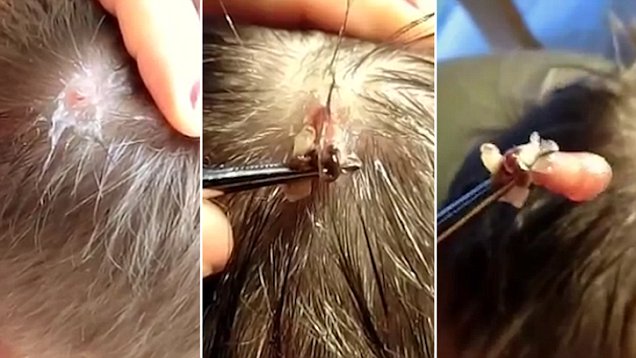
Shocking Viral Video Shows Botfly Larva Removed from Woman’s Scalp After Cancun Trip
Source : Twitter
Travelers scrolling through social media this week were met with a shocking sight: a 23-second viral video showing a botfly larva being carefully extracted from a woman’s scalp after what was reportedly a trip to Cancun. The clip, narrated in Spanish, quickly spread across platforms, sparking both horror and humor from viewers worldwide.
According to reactions circulating on Twitter, many users were stunned by the graphic footage, with comments ranging from “This is why I don’t do tropical trips” to “I’m never leaving my house again.” While the video may have fueled anxiety about international travel, medical experts confirm that the procedure shown is consistent with real treatment methods for botfly infestations. More importantly, they emphasize that such cases are rare and preventable.
Let’s take a closer look at what happened, what a botfly actually is, how infections occur, and what travelers can do to stay safe.
The Viral Video That Sparked Global Reactions
The widely shared clip shows a medical professional using numbing techniques and tweezers to extract what appears to be a botfly larva from the woman’s scalp. The footage reveals a small, wriggling larva being pulled from beneath the skin—an unsettling but medically accurate depiction of removal.
Reports indicate the woman had recently traveled to Cancun, a popular vacation destination for U.S. tourists. While Cancun itself is not considered high risk compared to deeper jungle regions, botflies are native to parts of Central and South America. The assumption is that the infection occurred during travel within tropical areas where the parasite is present.
Twitter users reacted instantly. Some were horrified. Others responded with nervous humor. A few expressed gratitude for modern medicine. Despite the dramatic reactions, infectious disease experts note that the video reflects a standard medical extraction procedure.
What Is a Botfly?
The parasite involved in the video is commonly identified as Dermatobia hominis, known as the human botfly. It is a species native to tropical regions of Central and South America.
Unlike typical flies that lay eggs directly on hosts, the human botfly uses a unique and somewhat disturbing strategy. It attaches its eggs to mosquitoes or other biting insects. When the mosquito bites a human, the warmth of the skin triggers the eggs to hatch. The tiny larvae then burrow into the skin through the bite wound or nearby hair follicles.
Once under the skin, the larva begins to grow.
How Botfly Infestation Works
The medical condition caused by botfly larvae is called myiasis. In the case of Dermatobia hominis, the larva embeds itself under the skin and creates a small breathing hole at the surface.
Here’s how the process typically unfolds:
- A mosquito carrying botfly eggs bites a person.
- The eggs hatch upon contact with warm skin.
- The larva enters through the bite site.
- It develops beneath the skin over several weeks.
- A small lump forms, often mistaken for a pimple or cyst.
- The larva eventually requires removal.
The breathing hole is essential for the larva’s survival. This small opening often leaks fluid and may cause mild discomfort or itching. Some patients report a sensation of movement beneath the skin, which can be extremely unsettling.
The larva remains under the skin for several weeks while it feeds and grows. If not removed, it will eventually emerge naturally to continue its life cycle. However, medical removal is strongly recommended to prevent complications.
Is Botfly Infection Dangerous?
In most cases, botfly infestations are not life-threatening. They are uncomfortable and distressing but rarely cause serious health complications if treated properly.
Potential issues may include:
- Secondary bacterial infections
- Inflammation
- Pain or tenderness
- Scarring
Prompt medical treatment minimizes these risks. The extraction process is generally straightforward and performed under local anesthesia.
Experts emphasize that while the idea is disturbing, botfly infestations are typically manageable and do not indicate poor hygiene or negligence.
Why Cancun Is Being Mentioned
Cancun is one of the most visited tourist destinations in Mexico. While it is not considered a major hotspot for botfly cases compared to rural jungle regions, travel to tropical environments increases exposure to insect bites.
It’s important to clarify that most travelers to Cancun and similar destinations do not experience botfly infestations. The viral video likely represents an isolated case rather than a widespread issue.
Tourism officials and health experts consistently recommend basic insect precautions in tropical climates, including:
- Using insect repellent containing DEET
- Wearing long sleeves in mosquito-prone areas
- Avoiding stagnant water zones
- Sleeping in screened or air-conditioned accommodations
These preventive measures significantly reduce the risk of insect-borne infections, including botfly larvae.
The Psychology of Viral Medical Videos
The intense reaction to the clip highlights a broader phenomenon: viral medical content often triggers strong emotional responses. Graphic procedures capture attention quickly, particularly when parasites are involved.
There are several reasons why such videos spread rapidly:
- Shock value
- Fear of contamination
- Travel-related anxiety
- Curiosity about rare medical conditions
- Social sharing driven by emotional reactions
On Twitter, users often amplify content through humor, exaggeration, or dramatic commentary. This can make isolated cases seem more common than they are.
Health professionals caution against drawing broad conclusions from single viral incidents.
How Doctors Remove Botfly Larvae
The procedure shown in the video aligns with established medical techniques for removing Dermatobia hominis larvae.
Common removal methods include:
1. Manual Extraction with Tweezers
After numbing the area, a physician gently enlarges the breathing hole if needed and uses tweezers to grasp and remove the larva intact.
2. Suffocation Technique
Petroleum jelly, nail polish, or adhesive substances may be applied to block the breathing hole. When deprived of oxygen, the larva moves upward, making extraction easier.
3. Minor Surgical Removal
In rare cases where the larva is embedded deeply, a small incision may be required.
Complete removal is important. If part of the larva remains inside the skin, it can cause inflammation or infection.
The video’s method appears medically sound and consistent with real-world treatment.
How Common Are Botfly Cases Among Tourists?
Botfly infections in travelers are relatively rare. Most reported cases occur in individuals who spend extended time in rural, forested, or jungle areas in Central or South America.
Short-term tourists who remain in urban or resort areas face significantly lower risk.
Travel medicine specialists estimate that the average tourist’s risk of botfly infestation is very low, particularly when proper insect precautions are taken.
Symptoms to Watch For After Tropical Travel
Anyone returning from a tropical region who notices unusual skin changes should monitor for:
- A persistent lump resembling a boil
- A small central hole
- Clear or bloody discharge
- Mild pain or itching
- A sensation of movement
If these symptoms occur, medical evaluation is recommended. Diagnosis is usually clinical and confirmed by visual inspection.
Why Fear Shouldn’t Stop Travel
The dramatic nature of the viral video has caused some viewers to express reluctance about tropical travel. Comments like “This is why I don’t do tropical trips” reflect understandable discomfort.
However, infectious disease experts stress that fear should be balanced with facts.
Every travel destination carries some risk, whether it’s foodborne illness, sunburn, altitude sickness, or insect bites. The key to safe travel lies in preparation and prevention, not avoidance.
Millions of people visit tropical regions annually without incident.
Preventing Botfly Infestation
Prevention strategies are simple and highly effective:
- Apply insect repellent regularly
- Reapply after swimming or sweating
- Wear protective clothing in forested areas
- Iron clothes after drying outdoors in tropical regions (heat can kill eggs)
- Use mosquito nets when necessary
These measures drastically reduce exposure to mosquito bites, which in turn prevents botfly transmission.
The Role of Social Media in Shaping Travel Perceptions
Viral clips often magnify rare events. A 23-second video can influence public perception far beyond the statistical reality.
When medical footage circulates on Twitter or other platforms, it can trigger widespread anxiety. However, it’s important to differentiate between a singular case and a systemic threat.
Public health experts emphasize evidence-based information over viral shock content.
Medical Experts Confirm the Treatment Is Legitimate
While the video may look dramatic, professionals confirm that the extraction technique shown aligns with standard treatment for myiasis caused by Dermatobia hominis.
This reinforces that the situation, though uncomfortable, is medically manageable.
The fact that the larva was successfully removed demonstrates the effectiveness of modern medical care.
Understanding Myiasis Beyond Botflies
Myiasis can occur from other fly species as well, though human botflies are among the most well-known.
In general, fly larvae infestations are more common in animals than humans. When they occur in humans, they are typically limited to tropical regions.
Cases in North America are extremely rare and usually linked to international travel.
Final Thoughts: Stay Informed, Not Alarmed
The viral video showing a botfly larva removed from a woman’s scalp after a Cancun trip has understandably captured attention. It is graphic, surprising, and unsettling.
But context matters.
Botfly infestations are uncommon among tourists. They are treatable. Prevention is simple. The extraction method shown is medically appropriate.
Rather than letting fear dominate travel decisions, travelers should focus on education and preparation. Using insect repellent, wearing protective clothing, and seeking medical attention for unusual symptoms are practical steps that greatly reduce risk.
Social media may amplify rare events, but informed travelers can separate viral shock from reality.
Tropical destinations continue to offer incredible experiences, vibrant cultures, and unforgettable adventures. With basic precautions, most journeys remain safe and enjoyable.
Knowledge—not panic—is the best travel companion.