
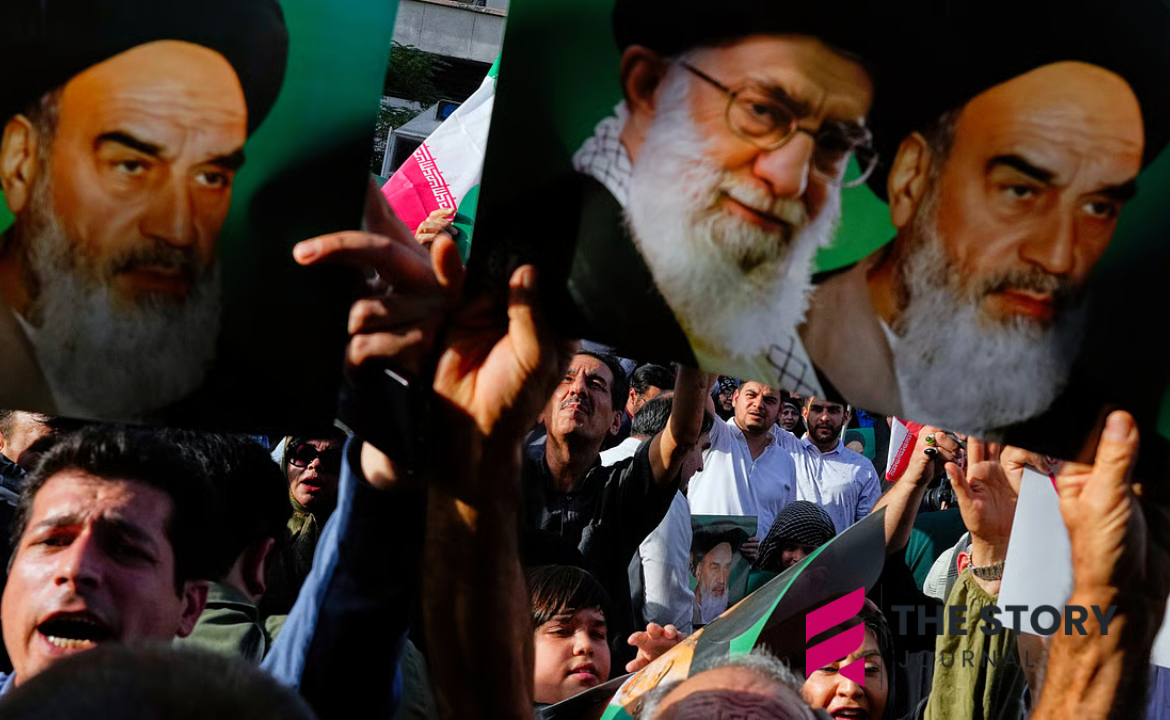
Viral List of Iran’s Allies Sparks Debate on Social Media
Source : Twitter
In times of international conflict, information spreads rapidly across social media platforms. While some posts provide accurate updates, others spark debate, confusion, and scrutiny. Recently, a viral list of countries allegedly supporting Iran gained massive attention online, especially on Twitter, where users began analyzing and questioning the credibility of the claims.
The list, reportedly shared by Dr. Moyi, included several nations such as Russia, China, North Korea, Pakistan, Brazil, and others as supposed allies of Iran in the ongoing geopolitical crisis. However, many analysts and social media users quickly pointed out that the situation is far more complicated than the viral post suggests.
The controversy comes at a time when the Middle East is facing one of its most tense periods in recent years following a dramatic escalation of conflict that began on February 28, 2026.
The Conflict That Sparked Global Concern
The crisis intensified after US and Israeli airstrikes targeted Iranian leadership, reportedly resulting in the death of Iran’s Supreme Leader, Ali Khamenei. The strikes marked a turning point in the long-standing tensions between Iran and its adversaries.
Following the airstrikes, Iran responded with missile retaliation, targeting strategic positions across the region. The situation quickly escalated into a wider regional security crisis, raising fears of a prolonged conflict.
The consequences of the escalation were felt globally.
Some of the immediate impacts included:
- Increased regional casualties
- Heightened military readiness across several countries
- Major disruptions to international energy markets
One of the most significant economic effects occurred when the Strait of Hormuz, a critical oil transportation route, faced disruptions. The closure or restriction of this vital passage caused global oil prices to surge, triggering concerns about worldwide economic stability.
Amid this tense environment, social media became a key platform for discussions, speculation, and analysis.
The Viral “Allies List” That Sparked Debate
The controversy began when Dr. Moyi shared a list claiming to identify countries aligned with Iran in the conflict.
The list quickly spread across Twitter, where it was reshared thousands of times. It included several prominent nations, among them:
- Russia
- China
- North Korea
- Pakistan
- Brazil
The implication of the post was that these countries formed a geopolitical bloc supporting Iran against Western influence.
However, many experts and commentators argued that labeling these countries as direct allies in the conflict was misleading.
Russia, China, and North Korea: Verbal Support but Limited Action
Among the countries mentioned in the viral list, Russia, China, and North Korea were highlighted as key players.
These nations did publicly criticize the airstrikes carried out by the United States and Israel, expressing concerns about the potential escalation of violence.
However, critics of the viral list pointed out an important detail:
none of these countries provided military assistance to Iran following the attacks.
Their responses remained largely diplomatic or rhetorical, focusing on condemnation of the strikes rather than direct involvement.
Political analysts emphasized that verbal criticism does not necessarily indicate a formal alliance or military support.
This distinction became a major point of discussion on Twitter, where many users argued that the viral list exaggerated the level of international backing Iran actually has.
Regional Proxies and Their Limited Response
Iran has historically maintained relationships with several regional groups often described as proxies or allied militias.
Two of the most well-known examples are:
- Hezbollah
- The Houthis in Yemen
These groups have previously been involved in conflicts connected to Iran’s regional strategy.
However, during the current crisis, their response appeared more restrained than expected.
Observers noted that while some symbolic gestures and statements were made, the groups did not launch large-scale operations that would significantly expand the conflict.
This limited reaction surprised some analysts who had anticipated a broader coordinated response.
The restrained activity further fueled the debate on Twitter, where users questioned whether Iran’s supposed network of allies was actually as strong as often portrayed.
Pakistan’s Unexpected Response
Another surprising development involved Pakistan, which appeared on the viral list as a pro-Iran ally.
In reality, the situation within Pakistan seemed more complex.
Reports indicated that Pakistani authorities suppressed pro-Iran protests that emerged following the escalation of the conflict.
This response suggested that the government was attempting to avoid direct alignment with Iran while maintaining domestic stability.
The contrast between the viral list’s claims and Pakistan’s actions became another example cited by skeptics online.
Many social media users argued that the inclusion of Pakistan on the list demonstrated how geopolitical relationships cannot be simplified into binary alliances.
Egypt’s Criticism of Iran’s Retaliation
Egypt, another influential country in the Middle East and North Africa, also became part of the broader discussion surrounding the conflict.
While Egypt expressed concern over the escalation of violence, it also criticized Iran’s missile retaliation.
This stance highlighted the complicated diplomatic balancing act many countries face during regional conflicts.
Rather than choosing clear sides, governments often attempt to avoid escalation while protecting their strategic interests.
Egypt’s criticism of Iran’s response further undermined the idea that a unified bloc of nations had formed around Tehran.
Social Media Reaction and the “Rogue’s Gallery” Label
As the list continued circulating on Twitter, skepticism grew rapidly.
Many users began describing the list as a “rogue’s gallery,” suggesting that it was more of a propaganda tool than an accurate representation of geopolitical alliances.
The term quickly spread across discussions on the platform.
Critics argued that the viral post grouped together countries with very different political systems, strategic interests, and foreign policy priorities.
Some of the nations on the list have historically maintained cooperative relationships with Western countries, while others pursue independent foreign policies.
Because of these differences, analysts warned against assuming that they would act collectively in support of Iran.
Propaganda Versus Reality
The debate surrounding the viral list highlights a broader issue: the role of propaganda and misinformation during international conflicts.
In the digital age, narratives can spread quickly across social media platforms, often without thorough verification.
Posts that simplify complex geopolitical relationships tend to gain attention because they are easier to understand and share.
However, these simplified narratives can also distort reality.
Experts noted that the list likely reflects perceptions and political messaging rather than confirmed alliances.
On Twitter, many users urged others to rely on verified news sources and expert analysis rather than viral posts.
The Geopolitical Complexity of Modern Alliances
International alliances in the 21st century rarely follow simple patterns.
Countries often cooperate on certain issues while competing on others.
For example:
- Two nations might share economic partnerships but disagree on military policy.
- Countries may oppose specific actions without supporting the opposing side.
- Governments often prioritize national interests over ideological alignment.
Because of this complexity, analysts caution against assuming that diplomatic criticism automatically translates into military or strategic support.
The viral list illustrates how easily these nuances can be lost in online discussions.
The Economic Fallout of the Conflict
Beyond political debates, the conflict has already produced significant economic consequences.
The Strait of Hormuz plays a crucial role in global energy markets.
A large percentage of the world’s oil supply passes through this narrow waterway.
When disruptions occur, the effects can ripple across the global economy.
Following the escalation of hostilities, concerns about the security of the shipping route caused oil prices to surge sharply.
Higher energy costs can lead to:
- Increased transportation expenses
- Rising inflation
- Economic uncertainty in many countries
These developments demonstrate how regional conflicts can quickly have global financial impacts.
Risks of Wider Escalation
Another major concern among international observers is the possibility of broader escalation.
When multiple countries become involved in a conflict—directly or indirectly—the situation can become increasingly unpredictable.
Diplomatic experts warn that misunderstandings or miscalculations could potentially lead to wider confrontation.
This is why many governments and international organizations are urging de-escalation and diplomatic dialogue.
Preventing the conflict from expanding further remains a priority for the global community.
Social Media’s Influence on Global Narratives
The viral list also highlights the growing influence of social media platforms in shaping public perceptions of international events.
Platforms like Twitter allow information—and sometimes misinformation—to spread faster than ever before.
During geopolitical crises, these platforms become central spaces where:
- News breaks in real time
- Analysts share insights
- Citizens debate global events
However, the speed of information sharing can also lead to the rapid spread of unverified claims.
This makes critical thinking and fact-checking more important than ever.
Why Skepticism Matters
The reaction to the viral list demonstrates the value of public skepticism in the digital era.
Many users on Twitter did not simply accept the claims at face value.
Instead, they examined:
- Official government statements
- Diplomatic responses
- Real-world actions taken by the countries involved
This careful analysis helped expose the gaps between the viral narrative and the actual geopolitical situation.
Such scrutiny is essential for maintaining accurate public understanding during times of crisis.
Lessons from the Viral Controversy
The controversy surrounding the viral list provides several important lessons about modern information ecosystems.
First, geopolitical relationships are complex and cannot easily be summarized in a single social media post.
Second, viral content often spreads because it is emotionally engaging or politically provocative.
Third, readers must approach such content with caution and verify claims through credible sources.
Finally, the discussion shows that social media users themselves can play an important role in challenging misleading narratives.
Conclusion
The viral list of Iran’s supposed allies, shared by Dr. Moyi and widely circulated on Twitter, sparked intense debate about the nature of global alliances during the ongoing conflict that began on February 28, 2026.
While the list included countries such as Russia, China, North Korea, Pakistan, and Brazil, many analysts and social media users quickly pointed out that the reality is far more nuanced.
Although some nations verbally condemned the US and Israeli airstrikes that reportedly killed Iran’s Supreme Leader Ali Khamenei, none provided direct military assistance to Tehran. Meanwhile, regional groups like Hezbollah and the Houthis showed limited involvement, and governments such as Pakistan and Egypt took positions that did not align with the narrative of a unified pro-Iran coalition.
As the crisis continues and global tensions remain high, the viral debate serves as a reminder that online narratives often oversimplify complex geopolitical realities.