
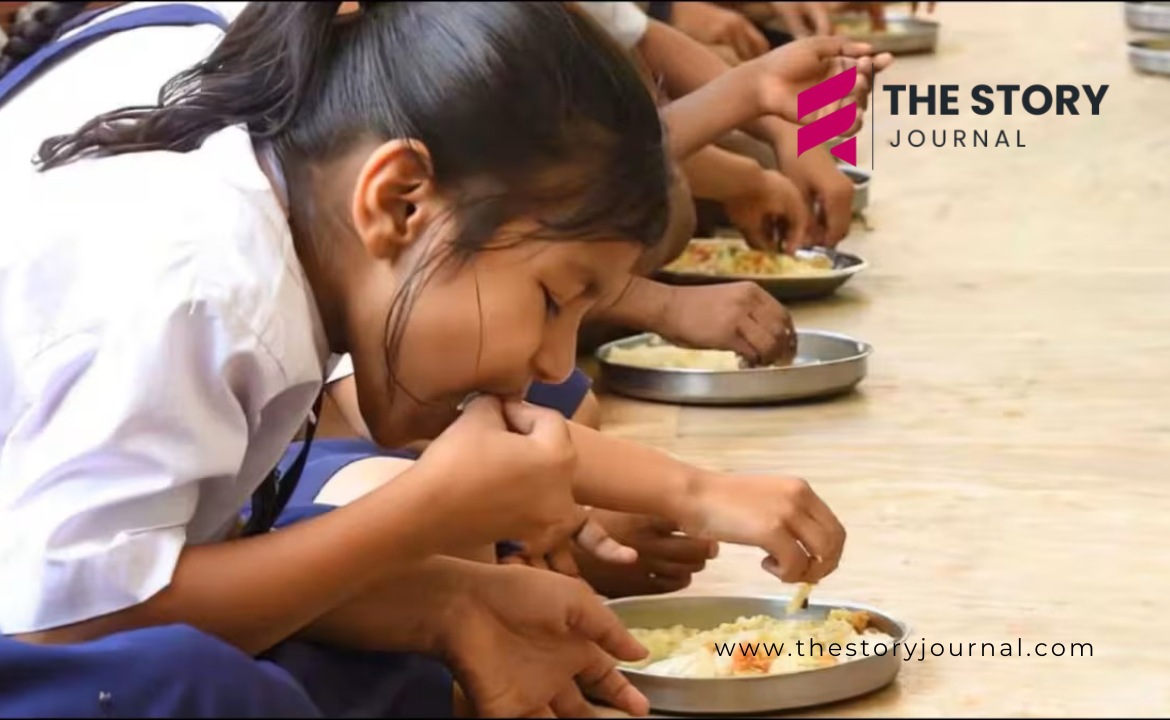
43 Students Fall Ill After Contaminated Midday Meal
Source : Twitter
Food safety in schools is one of the most critical aspects of child welfare. Parents trust educational institutions not only to educate their children but also to ensure their safety and well-being during school hours. Recently, a disturbing incident in Coimbatore has raised serious concerns about the hygiene and safety of school meals under the government’s midday meal scheme.
According to reports circulating on Twitter, 43 schoolchildren in Coimbatore were hospitalized after a lizard was allegedly found in their midday meal, triggering widespread outrage and demands for stricter monitoring of school food programs.
This unfortunate incident highlights the urgent need for improved food safety standards, regular inspections, and accountability within school meal programs.
What Happened in Coimbatore?
The incident took place at a corporation middle school in Kavundampalayam, Coimbatore. On Tuesday afternoon, students consumed the midday meal provided at the school as part of the government’s welfare scheme.
Shortly after eating the meal, several students began complaining of vomiting, nausea, and discomfort. Teachers and school authorities quickly realized that something was wrong when the number of affected children continued to increase.
Reports later revealed that a lizard had been found in the meal served to the students, raising immediate concerns about contamination.
In total:
- 43 students were affected
- 30 boys
- 13 girls
The situation caused panic among teachers and parents as the children were rushed to a nearby government hospital for medical attention.
Immediate Medical Response
All 43 students were taken to a government hospital, where they were immediately examined by medical professionals.
According to officials:
- A team of five doctors was assigned to monitor the children.
- The students were treated for symptoms including vomiting and unease.
- Thankfully, all the students were reported to be stable.
Doctors decided to keep the children under observation until at least 9 p.m. to ensure that no serious complications developed.
The quick response by the school authorities and medical team helped prevent the situation from escalating further.
The Midday Meal Scheme: A Lifeline for Millions
The midday meal scheme is one of India’s most important welfare initiatives. Introduced to improve child nutrition and increase school attendance, the program provides free meals to millions of children in government schools across the country.
For many students, especially from economically weaker families, the school meal may be their most nutritious meal of the day.
The scheme aims to:
- Improve nutritional status of children
- Increase school enrollment and attendance
- Reduce classroom hunger
- Promote social equality
However, incidents like the one in Coimbatore expose vulnerabilities in the implementation of the program.
Investigation Ordered by Authorities
Following the incident, local authorities launched an immediate investigation.
Officials announced several steps to prevent similar occurrences in the future:
- Inspection of the school kitchen
- Review of food preparation procedures
- Issuance of a circular on safe food practices to schools
- Action against those responsible based on investigation findings
The probe will specifically focus on whether the contamination occurred due to negligence, poor kitchen hygiene, or improper food storage practices.
Authorities also want to determine whether existing food safety guidelines were followed by the staff responsible for preparing the meals.
Food Safety Concerns in School Kitchens
School kitchens, especially in government institutions, often operate under limited resources and high pressure to prepare meals for large numbers of students.
Common challenges include:
- Lack of proper kitchen infrastructure
- Inadequate pest control measures
- Insufficient food storage facilities
- Limited staff training in food safety
If proper hygiene standards are not maintained, contamination risks increase significantly.
The presence of a lizard in a meal is a clear indication that pest control and food storage practices may not have been properly implemented.
Role of Kitchen Staff and Supervisors
Kitchen staff play a critical role in maintaining food safety. They are responsible for:
- Washing ingredients thoroughly
- Cooking food at safe temperatures
- Maintaining kitchen cleanliness
- Checking food for contamination before serving
Supervisors and school authorities must also ensure that:
- The kitchen is regularly inspected
- Food preparation areas are pest-free
- Ingredients are stored safely
- Meals are checked before distribution
A failure in any of these areas can lead to incidents like the one in Coimbatore.
Social Media Reaction
The incident quickly gained attention online, particularly on Twitter, where users expressed shock and anger.
Many people demanded:
- Stricter monitoring of school kitchens
- Regular inspections by health officials
- Accountability for negligence
Some users also called for improved infrastructure and funding for school kitchens to ensure safe food preparation.
Social media often plays a crucial role in bringing such issues to public attention and pressuring authorities to take swift action.
Previous Midday Meal Incidents in India
Unfortunately, this is not the first time concerns have been raised about food safety in school meals.
Over the years, several incidents have been reported involving:
- Food contamination
- Spoiled ingredients
- Insects or foreign objects found in meals
These incidents highlight the need for systemic improvements rather than temporary fixes.
Ensuring safe food for schoolchildren should always be a top priority.
Importance of Regular Inspections
Regular inspections can significantly reduce the risk of contamination.
Health and education authorities should conduct frequent surprise inspections to ensure that schools follow safety guidelines.
Inspections should focus on:
- Kitchen cleanliness
- Food storage conditions
- Pest control measures
- Quality of ingredients
- Hygiene practices of staff
Such inspections can identify problems early and prevent incidents before they occur.
Training for Food Handlers
Another critical step is proper training for cooks and food handlers.
Training programs should teach staff about:
- Basic food hygiene
- Safe cooking practices
- Preventing cross-contamination
- Pest prevention
- Safe food storage
Even simple practices like keeping food covered, cleaning surfaces regularly, and checking ingredients carefully can make a big difference.
Improving Infrastructure
Many school kitchens lack modern facilities. Improving infrastructure can greatly enhance food safety.
Necessary improvements may include:
- Proper ventilation
- Closed storage containers
- Clean water supply
- Separate areas for cooking and storage
- Pest-proof kitchens
Investing in these facilities will help protect students and maintain public trust in the midday meal scheme.
Community Monitoring
Parents and community members can also play an important role.
Schools can encourage community monitoring programs, where local volunteers periodically observe kitchen operations and report issues.
This increases transparency and ensures that safety standards are consistently maintained.
Psychological Impact on Students and Parents
Incidents like this can also affect the trust of parents and students.
Parents may become hesitant to allow their children to consume school meals if they fear contamination or poor hygiene.
Restoring trust requires:
- Transparent investigations
- Clear communication from authorities
- Visible improvements in food safety practices
Ensuring parents that corrective measures are being taken is essential.
Lessons from the Coimbatore Incident
The Coimbatore case provides several important lessons:
- Food safety cannot be ignored
- Regular inspections are essential
- Proper training for kitchen staff is necessary
- Infrastructure improvements are critical
- Quick medical response can prevent serious consequences
Fortunately, in this case, all 43 students were reported to be stable and received timely medical care.
However, the incident serves as a reminder that preventive measures must always come first.
Government’s Responsibility
Authorities must ensure strict enforcement of food safety regulations.
This includes:
- Regular monitoring of the midday meal scheme
- Ensuring that schools follow hygiene protocols
- Taking immediate action when violations occur
- Allocating adequate funds for kitchen upgrades
Strong oversight is necessary to protect the health of millions of schoolchildren.
Moving Forward
The midday meal scheme remains a vital program that supports education and child nutrition across India.
However, its success depends on maintaining high standards of safety and hygiene.
By implementing stronger monitoring systems, improving kitchen facilities, and providing proper training for staff, similar incidents can be prevented in the future.
Conclusion
The hospitalization of 43 schoolchildren in Coimbatore after a lizard was found in their midday meal has sparked serious concerns about food safety in schools. As reported and widely discussed on Twitter, the incident involved 30 boys and 13 girls from the corporation middle school in Kavundampalayam, who experienced vomiting and discomfort after consuming the contaminated meal.
Thankfully, all students are stable and under medical observation, thanks to the quick response from doctors and school authorities.
Nevertheless, the incident underscores the urgent need for better hygiene practices, regular inspections, and accountability in school food programs.
Children deserve safe, nutritious meals while they pursue their education. Ensuring that school kitchens meet proper safety standards is not just a responsibility—it is a necessity.