
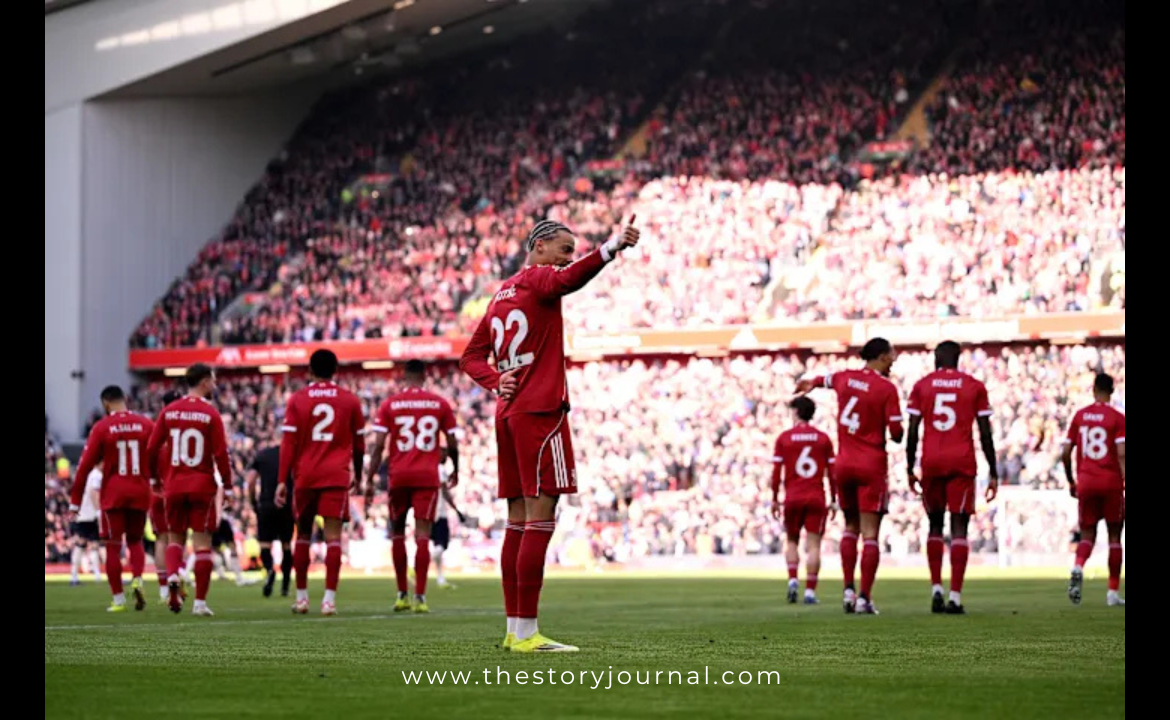
Liverpool 5-2 West Ham: Ekitiké Inspires Statement Win at Anfield
Source : Twitter
Liverpool delivered one of their most electrifying performances of the season, sweeping aside West Ham United 5-2 at Anfield in a high-octane clash that had everything—early dominance, defensive drama, individual brilliance, and a powerful statement in the race for Champions League qualification.
The emphatic win sees Liverpool draw level on points with Manchester United in fourth place, intensifying the battle for a coveted top-four finish. The game was defined by the early influence of Hugo Ekitiké, whose sharp movement and attacking intelligence set the tone for the Reds’ relentless first-half assault.
According to reactions circulating widely on Twitter, fans praised Liverpool’s attacking fluidity while acknowledging moments of defensive vulnerability that allowed West Ham to briefly threaten a comeback.
A Lightning Start at Anfield
From the opening whistle, Liverpool played with urgency and purpose. The intensity was unmistakable. The midfield pressed aggressively, the full-backs pushed high, and the forward line constantly interchanged positions.
The breakthrough arrived through Hugo Ekitiké, whose instinctive positioning inside the box paid dividends. A swift attacking move culminated in a precise finish that sent Anfield into early celebration mode. It was not just a goal—it was a signal. Liverpool meant business.
Ekitiké’s impact extended beyond scoring. His movement between defenders disrupted West Ham’s shape, creating pockets of space that Liverpool’s midfield exploited relentlessly.
Virgil van Dijk’s Towering Authority
Liverpool doubled their advantage through a familiar source—Virgil van Dijk. The captain rose above defenders to power home a header from a corner, underlining his aerial dominance.
Van Dijk’s goal was symbolic of Liverpool’s first-half superiority. They were sharper, stronger, and tactically more disciplined. Set-pieces once again proved a major weapon.
The Dutch defender not only contributed offensively but also marshaled the back line during crucial moments, though the second half would present new challenges.
Mac Allister’s Moment of Magic
The third goal of the first half was arguably the most aesthetically pleasing. Ekitiké cleverly knocked the ball down into the path of Alexis Mac Allister, who unleashed a crisp volley that flew beyond the goalkeeper.
Mac Allister’s strike reflected Liverpool’s cohesion. The timing of the run, the awareness of space, and the technical execution were flawless. At 3-0 by halftime, the match appeared settled.
Social media reactions on Twitter described it as “total football” from Liverpool during the opening 45 minutes.
West Ham Fight Back
Credit must be given to West Ham for refusing to collapse. The second half began with renewed determination from the visitors.
Tomás Soucek pulled one back, capitalizing on a defensive lapse that exposed Liverpool’s vulnerability when defending transitions. Moments later, Valentín Castellanos added another, injecting tension into the stadium.
At 3-2, what once seemed a comfortable evening transformed into a nervy affair. West Ham sensed opportunity. Liverpool suddenly looked less assured at the back.
Gakpo Restores Control
Just when anxiety began creeping into Anfield, Cody Gakpo delivered a decisive response. The Dutch forward finished confidently to restore Liverpool’s two-goal cushion.
Gakpo’s strike demonstrated composure under pressure. Rather than retreating into caution, Liverpool responded with renewed attacking intent.
That mentality—responding to adversity with aggression rather than fear—proved critical.
Disasi’s Own Goal Seals It
The final goal came via an unfortunate own goal from Axel Disasi. Under pressure from Liverpool’s attack, the defender inadvertently diverted the ball into his own net.
While fortune played a role, the goal was the result of sustained pressure. Liverpool forced mistakes by maintaining tempo and intensity deep into the match.
At 5-2, the result was beyond doubt.
Ekitiké: Catalyst of the Night
Though multiple players shone, Ekitiké stood out as the catalyst. His early goal changed the rhythm of the game and set the psychological tone.
His involvement in Mac Allister’s goal highlighted his ability to contribute creatively. Beyond statistics, his work rate unsettled West Ham’s back line throughout.
Twitter reactions emphasized how quickly he has adapted to Liverpool’s system, with many fans calling his performance a “statement game.”
Tactical Breakdown
Liverpool’s tactical structure was clear:
- High pressing from the front
- Aggressive overlapping runs from full-backs
- Quick vertical transitions
- Set-piece dominance
The first-half performance was near flawless. However, the second half exposed defensive inconsistencies, particularly when dealing with quick counterattacks and second balls.
West Ham exploited those moments efficiently, showing that even dominant performances can contain fragility.
Champions League Implications
The victory is massive in the broader context of the Premier League season. Drawing level with Manchester United in fourth place significantly boosts Liverpool’s Champions League aspirations.
Goal difference could also prove decisive, making the 5-2 margin even more valuable.
The race for the top four is tight, and momentum often becomes as important as mathematics. Liverpool’s emphatic display sends a psychological message to rivals.
Defensive Lapses: A Lingering Concern
While the scoreline suggests dominance, conceding twice after leading 3-0 highlights defensive issues.
Transition defense remains an area for improvement. When midfield pressure drops, spaces emerge between the lines. Against elite opposition, such lapses could prove costly.
Balancing attacking freedom with defensive stability will be key in upcoming fixtures.
West Ham’s Perspective
Despite the loss, West Ham demonstrated resilience. Soucek and Castellanos capitalized on limited opportunities, showing clinical finishing.
However, the defensive structure in the first half left too many gaps. Against a team with Liverpool’s firepower, such weaknesses are punished ruthlessly.
Their second-half response deserves recognition, but the early deficit was simply too large to overcome.
Anfield’s Influence
Anfield once again played its part. The energy during the first half amplified Liverpool’s intensity.
When West Ham narrowed the deficit, the crowd’s support lifted the team rather than transmitting anxiety. The atmosphere helped fuel the final push that resulted in two more goals.
Home advantage remains a powerful factor in Liverpool’s campaign.
Midfield Control
Liverpool’s midfield trio controlled tempo effectively in the first half. Mac Allister’s positioning allowed fluid link-up play between defense and attack.
Ball recovery in advanced areas created sustained pressure. Quick recycling of possession prevented West Ham from reorganizing defensively.
Though the second half saw a slight drop in control, the overall midfield performance laid the foundation for victory.
Set-Piece Superiority
Van Dijk’s header was another example of Liverpool’s strength from dead-ball situations.
Corners and wide free kicks consistently troubled West Ham. The combination of delivery quality and aerial prowess makes Liverpool dangerous whenever they earn a set-piece.
Such advantages often determine tight matches—though this one ultimately became a goal fest.
Psychological Momentum
Winning in style can transform belief within a squad.
Scoring five goals reinforces attacking confidence. Forwards feed off such performances. Midfielders feel liberated. Defenders, despite lapses, know the team can outscore opponents.
As the season approaches its decisive phase, psychological momentum may prove as crucial as tactical adjustments.
Twitter Reactions and Fan Buzz
Social media was flooded with reactions during and after the match. Hashtags celebrating Ekitiké’s breakout display trended among Liverpool supporters.
Fans highlighted the fluid attacking sequences, Van Dijk’s commanding header, and Gakpo’s calm finish under pressure.
However, some also pointed out defensive inconsistencies that must be addressed if Liverpool aims to secure Champions League qualification.
What Comes Next?
Consistency is now the challenge.
Liverpool must build on this performance rather than treat it as an isolated high point. Upcoming fixtures will test squad depth and tactical flexibility.
If they replicate their first-half intensity while tightening defensive organization, a top-four finish is within reach.
Key Takeaways from the 5-2 Win
- Ekitiké’s early goal shifted momentum immediately
- Van Dijk’s leadership and aerial strength remain vital
- Mac Allister provides technical brilliance in midfield
- Defensive concentration must improve
- The Champions League race has intensified
Final Thoughts
Liverpool’s 5-2 victory over West Ham was more than just three points—it was a declaration of intent.
The attacking display was thrilling, cohesive, and ruthless. The defensive lapses serve as reminders that perfection remains elusive. But football often rewards those who combine flair with resilience.
At Anfield, Liverpool did exactly that.
With Ekitiké igniting the charge and key players delivering when it mattered most, the Reds have positioned themselves firmly in the race for Champions League football.
If this performance becomes the standard rather than the exception, Liverpool’s season may yet end in triumph.