
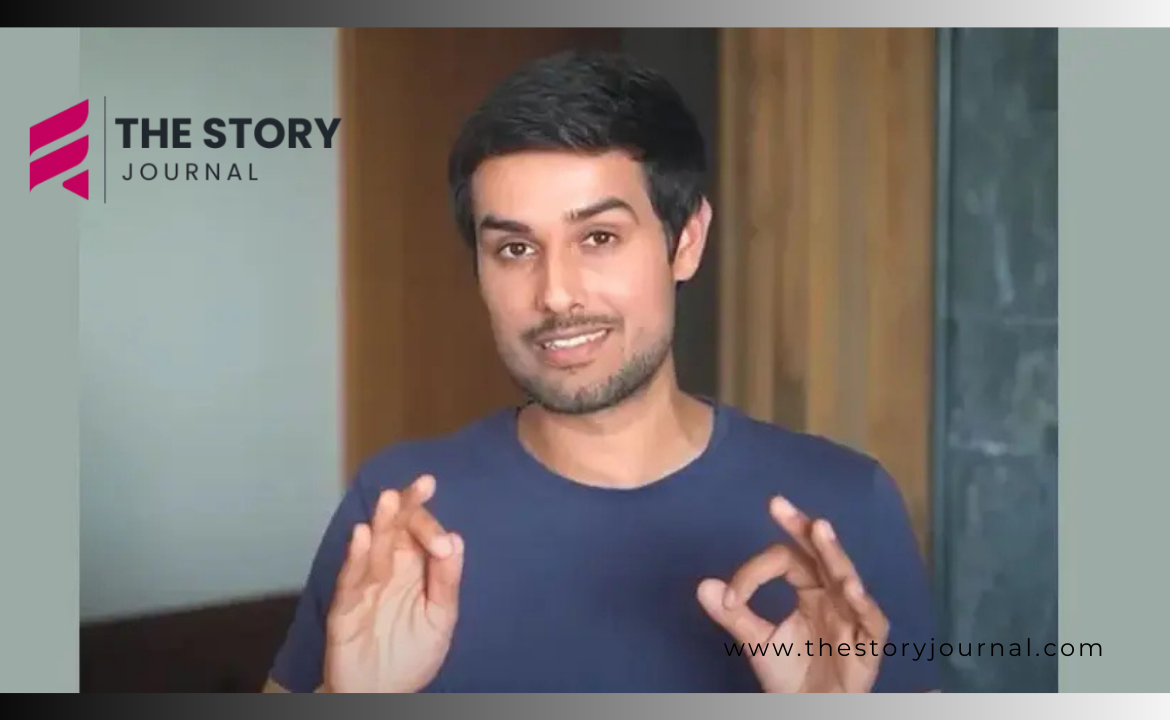
Dhruv Rathee’s Elon Musk Remarks Spark Twitter Firestorm
A 33-second podcast clip has ignited a fierce debate online after YouTuber and political commentator Dhruv Rathee questioned the extent of Elon Musk’s individual contributions to his companies.
The remarks were made during a conversation on KK Create, hosted by Kavya Karnatac. In the clip—now widely circulated on Twitter—Rathee comments in Hindi that Musk “didn’t do much on his own” and had prior wealth to invest. The host adds that Musk is “not the talent behind it.”
What followed was a digital storm.
From sarcasm and memes to serious debates about innovation, wealth, and power structures, Twitter transformed a short podcast moment into a sprawling ideological battleground.
This blog explores what was said, why it struck a nerve, and how the reactions reflect deeper divides in how society views billionaires, entrepreneurship, and influence.
What Exactly Did Dhruv Rathee Say?
In the now-viral 33-second snippet, Rathee discussed Musk’s rise and questioned the popular narrative that paints him as a self-made engineering genius.
Speaking in Hindi, Rathee suggested that Musk had significant financial backing early in his career and used that capital to invest in ventures that later became massive successes. The implication was that Musk’s achievements are often overstated as individual brilliance rather than strategic investment and team-driven execution.
Kavya Karnatac, the podcast host, echoed the sentiment, stating Musk is “not the talent behind it.”
The clip ends without deeper elaboration, which many critics argue removed context and nuance from what may have been a longer, more detailed discussion.
But on Twitter, context often becomes collateral damage.
Twitter Reacts: Sarcasm, Memes, and Mockery
Within hours of the clip surfacing, reactions poured in.
Musk supporters quickly rallied, accusing Rathee of undermining genuine engineering accomplishments. Many referenced Musk’s involvement in companies like Tesla and SpaceX, arguing that dismissing his role oversimplifies complex innovation journeys.
Sarcasm became the weapon of choice.
Some users mocked Rathee’s recent tech venture—his AI Fiesta app—jokingly dubbing him “CEO of aloo to sona university,” a sarcastic jab questioning his authority to critique billionaires.
Memes compared startup risks to YouTube commentary. Others contrasted Musk’s high-stakes space missions with Rathee’s online activism.
The tone ranged from playful to cutting.
The AI Fiesta Angle
Rathee’s critics seized on his newly launched AI Fiesta app as a talking point.
While the app itself has been marketed as an accessible AI tool for users, detractors used its existence to argue that Rathee is attempting to enter the same tech ecosystem he critiques.
Tweets framed the debate as hypocrisy:
“How can you question Musk’s innovation while launching your own AI platform?”
Supporters, however, defended Rathee by pointing out that building an app and critiquing global billionaires are not mutually exclusive actions.
The debate shifted from Musk’s talent to Rathee’s credibility.
The Pro-Musk Perspective
Musk’s admirers often emphasize his hands-on engineering involvement.
They highlight his role in pushing electric vehicles into mainstream acceptance, privatizing space travel, and accelerating satellite internet deployment.
To them, dismissing Musk as merely a wealthy investor undermines the technical leadership and risk-taking required to build such enterprises.
On Twitter, some users shared long threads outlining Musk’s engineering background and early entrepreneurial ventures, attempting to refute Rathee’s remarks point by point.
Others took a broader stance, arguing that no major tech company is built alone—yet visionary leadership still matters.
For this group, Rathee’s comment oversimplified a complex reality.
Rathee’s Supporters Call for Nuance
On the other side, Rathee’s followers argued that his statement reflects a structural critique rather than a personal attack.
They contend that modern tech billionaires benefit from pre-existing capital, networks, and teams of engineers whose contributions are often overshadowed by singular hero narratives.
For them, Rathee’s point wasn’t that Musk has done nothing—but that credit distribution in tech culture tends to exaggerate individual genius while minimizing collaborative effort.
Some Twitter users urged others to watch the full podcast episode instead of judging based solely on a short clip.
They emphasized context, tone, and broader themes of wealth concentration and power dynamics.
The Power of the 33-Second Clip
One of the most fascinating aspects of this controversy is how short-form content drives perception.
A 33-second snippet, detached from a longer discussion, became the definitive representation of Rathee’s stance.
This reflects a larger trend in digital media: virality often favors brevity over depth.
On Twitter, quick reactions dominate timelines. Few users take the time to seek original sources before forming opinions.
The result? Polarization intensifies.
Innovation vs. Capital: The Bigger Debate
At the heart of this controversy lies a timeless question:
What truly drives innovation—individual genius or access to capital and talent networks?
Musk’s journey includes both elements. He entered industries with significant financial backing but also took substantial risks in sectors where failure rates are notoriously high.
Rathee’s remarks appear to question how society frames that journey.
Is it fair to credit one individual for the work of thousands?
Or does leadership deserve singular recognition?
The debate goes beyond personalities. It touches on economic systems, startup culture, and the myth-making machinery of media.
Online Tribalism in Full Display
The Twitter debate also revealed how online discourse often splits into camps.
Supporters of Musk framed Rathee as dismissive and uninformed.
Supporters of Rathee framed Musk’s defenders as billionaire worshippers unwilling to examine structural privilege.
Nuance struggled to survive amid trending hashtags.
Some users attempted balanced takes, acknowledging Musk’s strategic brilliance while agreeing that no billionaire operates alone.
But moderation rarely goes viral.
Personal Brand vs. Corporate Machine
Musk’s public persona is deeply intertwined with his companies.
He is not merely an executive; he is a brand.
Rathee, too, operates within the digital influencer ecosystem, where personal credibility drives engagement.
This clash, therefore, is not just ideological—it’s about narrative control.
Who defines success?
Who gets credit?
Who shapes public perception?
Twitter became the arena where these questions played out in real time.
The Meme Economy
Humor played a central role in shaping the conversation.
Memes featuring exaggerated comparisons, sarcastic quotes, and playful edits circulated widely.
While humor can soften tension, it also amplifies reach.
A witty tweet travels faster than a thoughtful essay.
In this case, memes helped the clip spread far beyond Rathee’s usual audience, drawing in tech enthusiasts, startup founders, and casual observers alike.
Context Matters—But Often Arrives Late
As discussions intensified, some users shared the full podcast link, encouraging others to assess the broader conversation.
In longer context, Rathee’s remarks appeared part of a broader critique of wealth concentration and systemic privilege.
However, by then, the viral narrative had solidified.
This highlights a recurring digital dilemma: by the time full context emerges, public opinion may already be polarized.
Why Elon Musk Sparks Strong Reactions
Few figures generate as much admiration and criticism as Elon Musk.
He is simultaneously celebrated as a visionary and criticized as polarizing.
Any comment about him—positive or negative—inevitably triggers intense engagement.
Rathee’s clip tapped into that emotional charge.
Whether one sees Musk as an engineering hero or a symbol of concentrated wealth largely determines how they interpret the remark.
Dhruv Rathee’s Role as a Critic
Rathee has built his platform around analyzing power structures, political narratives, and corporate influence.
His commentary style often challenges mainstream narratives.
From this perspective, questioning Musk aligns with his broader approach of scrutinizing authority and wealth.
Supporters argue that critique is not disrespect—it is necessary for democratic discourse.
Critics counter that skepticism must be balanced with acknowledgment of tangible achievements.
Digital Culture and Binary Thinking
This controversy underscores how social media often encourages binary thinking.
You are either pro-Musk or anti-Musk.
You either defend Rathee or ridicule him.
Complex realities become simplified into slogans.
Yet innovation ecosystems are rarely black and white.
They involve investors, engineers, designers, policymakers, and market forces.
Reducing them to singular narratives may miss important dimensions.
Lessons from the Viral Moment
The episode offers several takeaways:
- Short clips can shape global discourse.
- Context is frequently sacrificed for virality.
- Public figures face amplified scrutiny.
- Social media rewards sharp takes over nuanced analysis.
Most importantly, it shows how quickly online conversations can shift from discussion to division.
Where the Debate Stands Now
Days after the clip surfaced, discussions continue across Twitter threads.
Some users have moved on. Others remain entrenched.
Rathee has not significantly escalated the matter, and Musk himself has not responded directly to the clip.
But the conversation remains a case study in how digital culture magnifies disagreements.
Conclusion: Beyond the Clip
What began as a 33-second remark on a podcast evolved into a full-scale Twitter debate about talent, privilege, and innovation.
Dhruv Rathee questioned the narrative surrounding Elon Musk’s individual genius.
Musk’s supporters defended his achievements.
Rathee’s followers emphasized systemic critique.
In the end, the controversy reveals more about online culture than about either individual.
It shows how quickly digital audiences polarize.
How memes can overshadow nuance.
And how powerful narratives shape public perception.
Perhaps the real takeaway isn’t about who is right or wrong—but about how we consume and react to information in the age of viral clips.
Because sometimes, the loudest debates say less about the people involved and more about the platforms that amplify them.