
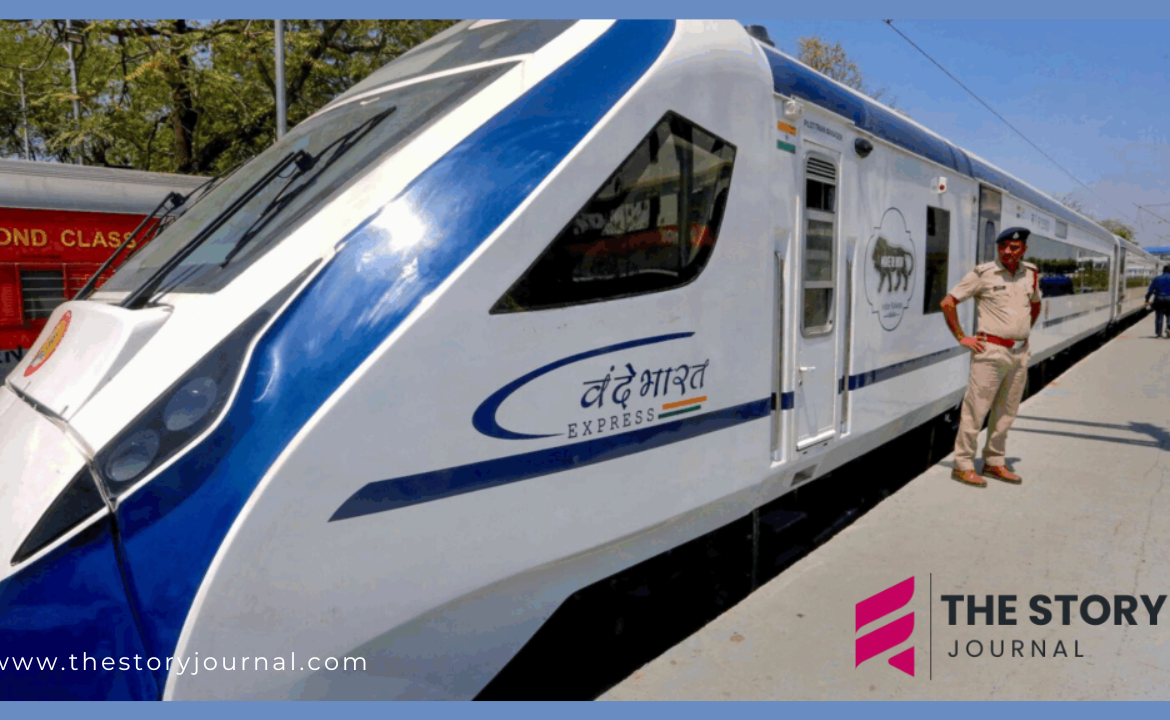
Twitter Reacts to Bengaluru–Goa Vande Bharat Plan
Source : Twitter
A proposed Vande Bharat Express connecting Yesvantpur in Bengaluru to Madgaon in Goa has sparked widespread discussion on Twitter, with supporters welcoming the promise of modern comfort and critics questioning the practicality of a 13-hour chair-car journey.
The plan envisions an early morning departure at 6:05 a.m. from Yesvantpur Junction, reaching Madgaon at 7:15 p.m., before making a return trip the same evening. Covering approximately 640 kilometers along India’s scenic coastal belt, the train would use the new Padil Bypass to reduce intermediate stops and benefit from minor speed upgrades in select sections.
Despite the upgrades, the total travel time remains similar to existing trains and some bus services, raising debate over whether the premium branding justifies the journey duration.
The conversation, amplified on Twitter, reflects broader questions about infrastructure, passenger comfort, and the evolving identity of India’s rail network.
The Proposed Route: Yesvantpur to Madgaon
The Vande Bharat service is expected to start from Yesvantpur Junction in Bengaluru, a major rail hub in Karnataka’s capital, and travel toward Goa’s Madgaon station, the primary gateway for beach-bound tourists.
The route spans roughly 640 kilometers and would run along the picturesque Konkan Railway corridor. Known for lush greenery, tunnels, rivers, and coastal vistas, the Konkan stretch is among the most scenic railway journeys in India.
A key operational feature of the proposal is the use of the Padil Bypass near Mangaluru. The bypass is designed to streamline operations by avoiding certain congested sections, thereby reducing stoppages and improving punctuality.
Officials have emphasized that while headline speeds may not dramatically increase, operational efficiencies could improve reliability and capacity.
A 13-Hour Journey: Comfort vs Duration
At the center of online debate is the journey time.
Departing at 6:05 a.m. and arriving at 7:15 p.m., the proposed service would take about 13 hours and 10 minutes. While marketed as a premium offering, this timing closely mirrors several existing express trains and some long-distance bus services.
On Twitter, reactions have been mixed.
Supporters argue that the Vande Bharat brand promises:
- Modern, air-conditioned coaches
- Ergonomic seating
- Improved onboard catering
- Better cleanliness and maintenance
- Enhanced safety systems
Critics counter that spending over 13 hours in a chair-car configuration may not appeal to families with children or elderly passengers.
Some users questioned whether a sleeper or semi-sleeper variant would be more suitable for a route of this length.
The Ghat Challenge: Why Speeds Are Limited
One major reason for the comparable travel time lies in geography.
The Bengaluru–Goa corridor passes through Western Ghats terrain, characterized by steep gradients, curves, and tunnels. These natural constraints limit maximum speeds regardless of train technology.
While minor speed upgrades are reportedly planned for select sections, significant acceleration is difficult without major track realignment or infrastructure overhaul.
Rail experts on Twitter have pointed out that:
- Safety considerations in ghat sections restrict top speeds
- Track curvature limits sustained high-speed running
- Weather conditions in monsoon months require cautious operations
Thus, even a modern semi-high-speed train cannot fully overcome these physical limitations.
The Padil Bypass: A Key Efficiency Move
The inclusion of the Padil Bypass in the proposed routing is seen as a strategic improvement.
By bypassing certain congested nodes, the train can avoid time-consuming reversals or additional halts. This not only improves punctuality but also allows for smoother operational flow.
While it does not significantly reduce overall travel time, it enhances reliability — a crucial factor for premium services.
Twitter users familiar with coastal rail travel have welcomed this move, noting that reduced operational bottlenecks can make journeys more predictable.
Capacity Expansion and Demand
Bengaluru and Goa represent one of the busiest leisure corridors in southern India.
Weekend travelers, holidaymakers, students, and corporate employees frequently move between the tech hub of Bengaluru and the beaches of Goa.
Existing trains often run at high occupancy rates, particularly during peak tourist seasons.
Officials argue that adding a Vande Bharat service increases capacity and offers travelers an additional premium option.
On Twitter, some users suggested that even if travel time remains unchanged, improved comfort could attract passengers who prefer train travel over road journeys.
The Chair-Car Debate
Unlike overnight long-distance trains equipped with sleeper berths, Vande Bharat trains are typically configured with chair-car and executive chair-car seating.
For shorter routes of 5 to 8 hours, this format is widely accepted. However, a 13-hour daytime journey presents a different equation.
Travelers online have raised questions such as:
- Will seating remain comfortable over extended hours?
- How will meal services be managed throughout the day?
- Is there sufficient legroom for elderly passengers?
- Would a reclining mechanism be adequate for rest?
Supporters respond that ergonomic design, improved cushioning, and controlled climate conditions may offset the absence of sleeping berths.
The debate underscores how comfort is subjective and varies by passenger profile.
Economic and Tourism Impact
From an economic standpoint, improved connectivity between Bengaluru and Goa could stimulate tourism and business travel.
Bengaluru’s large working population frequently seeks short vacations, and Goa remains a top destination.
A reliable early morning departure allows travelers to reach Goa by evening, potentially maximizing holiday time.
Similarly, the same-evening return option offers flexibility for weekend trips.
Local tourism stakeholders on Twitter have expressed optimism that premium rail connectivity could attract a broader demographic, including families and senior travelers who prefer rail over road.
Comparing Road and Rail
Travel time between Bengaluru and Goa by road typically ranges from 10 to 14 hours, depending on traffic and route selection.
Buses, including sleeper and semi-sleeper services, are popular alternatives.
In this context, the proposed Vande Bharat service offers:
- Greater onboard stability
- Dedicated restrooms
- Wider movement space
- Scenic uninterrupted views
However, bus services sometimes provide sleeper options that allow overnight travel, reducing perceived fatigue.
The choice between modes may ultimately depend on passenger priorities: speed, comfort, cost, or convenience.
Social Media Reaction
Twitter has become the primary forum for public discussion on the proposal.
Some common themes emerging from posts include:
- Excitement about another Vande Bharat addition
- Concerns over long seating duration
- Curiosity about ticket pricing
- Questions regarding frequency and stops
- Appreciation for coastal scenery
Several users noted that even if journey time remains similar to existing trains, the improved onboard environment could justify a premium fare.
Others argued that infrastructure modernization should prioritize reducing travel time rather than rebranding comparable durations.
The Broader Vande Bharat Vision
The Bengaluru–Goa proposal fits into a broader national effort to expand Vande Bharat services across key corridors.
These trains are positioned as symbols of modernization, emphasizing indigenous manufacturing, improved passenger experience, and semi-high-speed capability.
While not true high-speed rail, they represent incremental upgrades within existing track infrastructure.
The coastal corridor poses unique challenges, making this proposal a test case for balancing comfort upgrades with geographical constraints.
Infrastructure Realities
Railway infrastructure improvements often require years of planning, environmental clearances, and construction.
Upgrading ghat sections for significantly higher speeds would involve:
- Tunnel expansions
- Curve realignments
- Enhanced signaling systems
- Strengthened track foundations
Given these complexities, incremental enhancements such as bypass usage and selective speed boosts may represent practical short-term solutions.
Twitter discussions have highlighted this trade-off between ideal and feasible infrastructure development.
Passenger Expectations
As India’s middle class grows, expectations around travel comfort continue to evolve.
Air travel remains the fastest option between Bengaluru and Goa, typically under two hours of flight time. However, airport transfers and security procedures add to overall journey duration.
For travelers who prefer rail’s scenic and less restrictive environment, a premium train could strike a balance.
Passenger expectations may center on:
- Cleanliness
- Punctuality
- Onboard dining quality
- Smooth ride experience
Meeting these expectations will determine the service’s long-term popularity.
Environmental Considerations
Rail travel generally produces lower per-passenger carbon emissions compared to road or air transport.
Encouraging train usage on a busy leisure corridor could reduce traffic congestion and associated emissions.
Some Twitter users have framed the proposal within sustainability discussions, suggesting that improved rail services align with greener mobility goals.
Looking Ahead
While the proposal has generated excitement, final implementation details such as ticket pricing, halt patterns, and frequency remain under consideration.
The debate illustrates how transportation projects intersect with public expectations, regional geography, and digital discourse.
Supporters see an opportunity for improved comfort and additional capacity. Critics question whether incremental upgrades justify premium branding without substantial time savings.
Both perspectives reflect legitimate considerations.
Conclusion
The proposed Bengaluru–Goa Vande Bharat Express has sparked lively conversation on Twitter, revealing the complex interplay between aspiration and infrastructure reality.
Linking Yesvantpur to Madgaon across 640 kilometers of scenic coastline, the train promises modern amenities, increased capacity, and improved operational flow through the Padil Bypass.
Yet the 13-hour journey time — similar to existing options — has prompted debate about comfort, practicality, and the limits imposed by ghat terrain.
Ultimately, the service’s success may depend not solely on speed but on reliability, onboard experience, and passenger satisfaction.
In a country where rail travel is both a necessity and a cultural institution, even incremental upgrades carry symbolic weight.
The Bengaluru–Goa Vande Bharat proposal reflects a broader narrative: modernization within constraints, ambition balanced by geography, and public opinion shaped in real time on social media.