
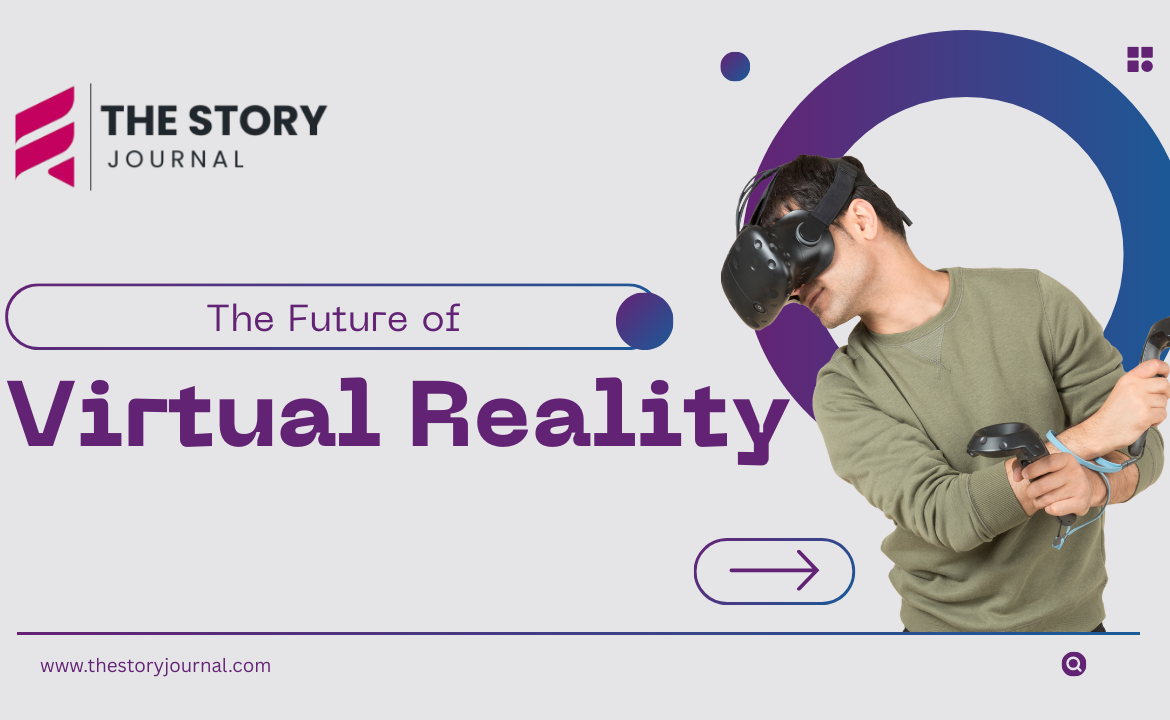
The Future of Virtual Reality: What’s Next?
Virtual reality has traveled a long road from clunky headsets and low-resolution demos to immersive worlds that feel almost real. What once seemed like science fiction is now part of gaming, fitness, education, training, therapy, and even remote work. Yet, despite the impressive progress so far, we are still in the early chapters of VR’s story. The future of virtual reality promises deeper immersion, lighter hardware, smarter software, and more meaningful ways to connect with digital worlds and with each other.
The next phase of VR won’t just be about better graphics. It will reshape how we learn, work, socialize, heal, and create. As technology advances, virtual reality is moving from being a niche entertainment device to a platform that could rival smartphones and computers as a primary interface for digital life.
How VR Got Here: A Quick Look Back
Before we talk about what’s next, it helps to understand how far VR has already come. Early VR systems were bulky, expensive, and limited to research labs or experimental arcades. The experience often caused motion sickness due to low frame rates and poor tracking. Over the last decade, consumer headsets have become lighter, more affordable, and far more capable. Improvements in display resolution, refresh rates, inside-out tracking, and processing power have transformed VR from a novelty into a viable medium.
The gaming industry pushed early adoption, but VR has since expanded into enterprise training, virtual classrooms, design and architecture visualization, medical therapy, and fitness. Each new use case brought better hardware and more refined software experiences. This steady evolution sets the stage for the next leap forward.
The Hardware Revolution: Smaller, Lighter, More Powerful
One of the biggest barriers to widespread VR adoption has always been hardware. Headsets can feel heavy, awkward, and isolating. The future of VR hardware is focused on comfort, portability, and realism.
Headsets will continue to get smaller and lighter. Advances in lens technology, micro-OLED and micro-LED displays, and compact processing chips will reduce bulk while increasing visual clarity. Future headsets will feel closer to wearing glasses than strapping a device to your face. As battery technology improves, users will enjoy longer sessions without discomfort or overheating.
Haptic technology will also evolve. Today’s VR controllers offer basic vibration feedback, but future systems will use advanced haptics in gloves, suits, and accessories to simulate touch, texture, and resistance. This will allow users to feel the weight of virtual objects, the tension of pulling a bowstring, or the texture of a surface. The sense of presence will deepen as more senses are engaged.
Eye tracking and facial tracking will become standard. This will not only improve performance by rendering high-resolution graphics where you are looking, but also enable more natural social interactions. Avatars will mirror facial expressions and eye movements, making conversations in VR feel more human and emotionally rich.
The Rise of Mixed Reality and Spatial Computing
The future of VR is tightly linked with augmented reality and mixed reality. Instead of choosing between fully virtual worlds and the real world, users will move fluidly between them. Mixed reality blends physical and digital elements, allowing virtual objects to exist in your real environment.
This shift toward spatial computing means digital content will no longer be confined to flat screens. Virtual screens, 3D models, and interactive tools will appear in your physical space. You might design a room layout with virtual furniture placed in your actual living room, collaborate with colleagues around a floating 3D model, or learn anatomy by examining a life-sized holographic body.
As sensors improve, mixed reality will understand your environment more accurately. Walls, furniture, and people will be recognized in real time, enabling digital content to interact naturally with physical space. This opens the door to new forms of productivity, creativity, and play.
AI and VR: Smarter Worlds, Smarter Interactions
Artificial intelligence will be a major force shaping the future of VR. Today’s virtual worlds are mostly scripted experiences. In the future, AI-driven environments will adapt to users in real time.
Non-player characters will behave more like real people. They will remember past interactions, respond naturally to conversation, and adapt their behavior based on your actions. Training simulations will become more dynamic, with scenarios changing based on how you perform. Educational VR experiences will personalize lessons based on how quickly you learn and where you struggle.
AI will also help create content. Instead of manually designing every environment, creators will use generative tools to build worlds quickly. Users may even describe what they want to experience, and AI will generate a virtual space or scenario on the fly. This lowers the barrier to content creation and allows for endless customization.
Voice recognition and natural language processing will make interactions more intuitive. Instead of navigating menus, you’ll talk to the virtual world. This will make VR feel less like using software and more like inhabiting a living space.
VR Beyond Gaming: The Expanding Use Cases
Gaming may have brought VR into the mainstream, but the future of VR lies far beyond entertainment. The technology is steadily becoming a platform for real-world impact.
In education, VR will enable immersive learning experiences. Students can explore historical events by stepping into realistic recreations, travel inside the human body to understand biology, or conduct virtual science experiments without risk. This kind of experiential learning can deepen understanding and engagement in ways textbooks cannot.
In healthcare, VR is already being used for pain management, physical therapy, and mental health treatment. The future will bring more sophisticated therapeutic environments tailored to individual patients. Surgeons will train in hyper-realistic simulations. Patients recovering from injuries will practice movements in virtual environments that adapt to their progress.
In the workplace, VR will reshape remote collaboration. Virtual offices and meeting spaces will feel more natural than video calls. Colleagues will share 3D whiteboards, manipulate models together, and feel a stronger sense of presence. This could reduce the isolation of remote work and enable new forms of creative collaboration.
In fitness and wellness, VR will turn workouts into immersive experiences. Instead of staring at a wall while exercising, users can climb virtual mountains, box in futuristic arenas, or meditate in calming digital landscapes. This can increase motivation and make healthy habits more engaging.
Social VR: The Evolution of Digital Presence
Social VR is poised to become a major part of how people connect online. Instead of text messages or video calls, users will meet in shared virtual spaces. These spaces can be anything from realistic cafes to fantastical worlds.
The future of social VR depends on making interactions feel natural and safe. Advances in avatar realism, body tracking, and facial expression capture will make digital presence more authentic. At the same time, platforms will need strong moderation tools and privacy controls to ensure healthy communities.
Social VR could redefine how friendships and communities form online. People may attend virtual concerts, explore virtual cities, or host gatherings in shared spaces. For those who feel isolated in the physical world, social VR can provide meaningful connections. The challenge will be balancing immersion with healthy boundaries between digital and physical life.
The Metaverse Debate: Hype vs Reality
The idea of a metaverse has become closely associated with VR, but the concept is still evolving. The future metaverse is often imagined as a persistent, interconnected network of virtual worlds where people work, play, and socialize.
In reality, the metaverse will likely develop gradually rather than appearing fully formed. Different platforms will emerge with their own ecosystems, standards, and communities. Interoperability will be a major challenge. The future will depend on whether companies and developers agree on shared standards that allow users to move assets and identities across platforms.
The success of any metaverse-like vision will depend on user trust. Privacy, data ownership, and digital identity will be critical issues. Users will want control over how their data is used and how their digital selves are represented. The platforms that prioritize transparency and user rights will have a better chance of earning long-term adoption.
Challenges and Barriers to Overcome
Despite its promise, VR faces real challenges. Motion sickness remains an issue for some users, although improved frame rates and tracking are reducing this problem. Cost is another barrier. While prices have come down, high-quality VR systems are still out of reach for many people.
Content quality is uneven. While there are standout experiences, many VR apps feel experimental or shallow. The future of VR depends on a steady flow of meaningful, high-quality content that goes beyond tech demos. Developers need better tools, funding, and support to create compelling experiences.
There are also social and ethical considerations. Prolonged VR use raises questions about mental health, addiction, and social isolation. Designers will need to consider how to encourage healthy usage patterns. Policymakers and researchers will play a role in understanding the long-term effects of immersive technology.
The Role of Standards and Open Ecosystems
For VR to reach its full potential, open standards will be crucial. Interoperability between platforms will allow users to move between virtual worlds without starting from scratch each time. This includes carrying digital identities, assets, and social connections across experiences.
Open development tools and standards can also foster innovation. When creators are not locked into proprietary ecosystems, they can experiment and collaborate more freely. This can lead to a richer and more diverse VR landscape.
The future may see the rise of shared protocols for virtual spaces, similar to how the web evolved. This would allow VR to grow as a global platform rather than a collection of isolated experiences.
How VR Could Change Everyday Life
As VR becomes more accessible, it may integrate into daily routines in subtle ways. Virtual screens could replace physical monitors, allowing people to work in customizable digital offices. Virtual travel could offer realistic experiences of distant places, making cultural exploration more accessible. Creative professionals might sculpt, paint, and design in 3D space as naturally as they use pen and paper today.
For many people, VR will complement rather than replace physical experiences. The most successful VR applications will enhance real life, not compete with it. The future of VR is about extending human capability, not escaping reality.
Looking Ahead: What’s Next for Virtual Reality?
The future of virtual reality is not defined by a single breakthrough, but by the convergence of many trends. Lighter hardware, better displays, advanced haptics, AI-driven environments, mixed reality, and open ecosystems will collectively push VR forward. Over time, VR may become as commonplace as smartphones, fading into the background of daily life while quietly reshaping how we interact with digital content.
The next decade will be a period of experimentation. Some ideas will fail, others will surprise us. What’s certain is that VR will continue to blur the line between physical and digital worlds. The real question is not whether VR will become mainstream, but how thoughtfully we choose to integrate it into our lives.
The future of virtual reality is not just about technology. It’s about human experience. The tools are evolving, but the goal remains the same: to create more meaningful, immersive, and empowering ways for people to learn, connect, and create.